Cart
0
You're staring at retinol before-after photos online and wondering when you'll see those results yourself. Here's the truth: retinol works, but not overnight — and your timeline won't match the person next to you. Most of you will see smoother texture at 3–6 weeks, noticeably softened fine lines at 2–3 months, and dramatic wrinkle reduction by 4–6 months. The catch? That progression depends on your starting skin condition, the retinol strength you choose, and whether you're sabotaging your progress with one critical mistake.
I've watched hundreds of clients navigate this timeline. The ones who quit at week two — when skin looks temporarily worse — miss the transformation that happens at month three. The ones who skip SPF run in place, undoing at sunrise what retinol built overnight. This guide walks you through the realistic retinol results timeline, strength progression, and the exact routine that actually shows visible retinol skin transformation.
What Retinol Changes Look Like (Week by Week)
Weeks 1–2: The Adjustment Phase You Can't Skip
Your skin will likely look worse before it looks better. Expect flaking, dryness, mild redness — this is normal adaptation, not damage. Retinol accelerates cellular turnover, pushing dead cells to the surface faster than your skin's used to shedding them. It's not pretty, but it's temporary.
Clients in their 30s often panic at this stage and stop. Don't. The flaking resolves within 2–3 weeks as your skin adapts to the new turnover rate.
Weeks 3–6: First Visible Changes
Texture smooths. Pores appear more refined. A subtle glow emerges as fresh cells reach the surface. This is when you'll start noticing retinol progress — not dramatic yet, but enough to know it's working.
Months 2–3: Texture and Tone Improvement
Fine lines soften visibly. Uneven tone starts to fade — freckles lighten, post-inflammatory marks diminish. Skin looks plumper because retinol stimulates collagen synthesis in the dermis, which takes 8–12 weeks to show at the surface.
Two clients both started 0.3% retinol last year — one had mild photo-aging, the other deep forehead lines. The first saw major change at week six. The second? Month five. Same product, different starting points.
Months 4–6: The Full Retinol Effect
Wrinkle depth visibly reduces. Pigmentation fades significantly. Skin maintains consistent radiance. Kafi et al. (2007), New England Journal of Medicine, showed measurable wrinkle reduction at 24 weeks with 0.02% tretinoin — this is the timeline backed by clinical observation, not marketing hype.
Why Your Before-After Won't Match Your Friend's
Starting Skin Condition Matters More Than Strength
Pigmentation responds faster than deep wrinkles. If your primary concern is post-acne marks, you'll see visible results weeks sooner than someone targeting eleven lines. Your retinol results timeline depends on what you're treating, not just what you're using.
Retinol Strength vs Retinal vs Tretinoin
Retinol (0.3–1%) requires two enzymatic conversions to reach retinoic acid, the form your skin actually uses. Retinal (retinaldehyde, 0.01–0.2%) requires only one conversion — it works 11 times faster than retinol with less irritation during adjustment. Prescription tretinoin skips conversion entirely and delivers the fastest results.
Medik8's Crystal Retinal range uses stabilized retinaldehyde. You'll see texture improvement 30–40% sooner than with standard retinol because the delivery to the dermis is more direct.
Application Frequency and Build-Up Protocol
Start 2–3 times weekly for the first month, then daily once your skin adapts. Gradual introduction prevents the dramatic peeling that derails progress. Jumping straight to nightly use guarantees you'll stop by week two because your barrier can't keep up.
The One Mistake That Delays Results
Skipping SPF is the number-one saboteur. Retinoids increase photosensitivity by thinning the stratum corneum temporarily — UV exposure undoes the collagen synthesis you're building overnight. Missing SPF means you're running in place.
Portugal, Spain, Italy, and France all have high year-round UV indices. Daily SPF isn't optional when using retinoids — it's mandatory. The American Academy of Dermatology sun-protection guidance confirms that retinoid users must apply broad-spectrum SPF 30+ every morning, even in winter.
I see this weekly: someone starts retinol, skips SPF, wonders why their hyperpigmentation isn't fading. UV creates new melanin faster than retinol can fade it. You need both ends of the equation working.
A Retinol Routine That Actually Shows Before-After Progress
Before adding any new active, patch test on the inner forearm for 48 hours.
Evening (Where Retinol Lives)
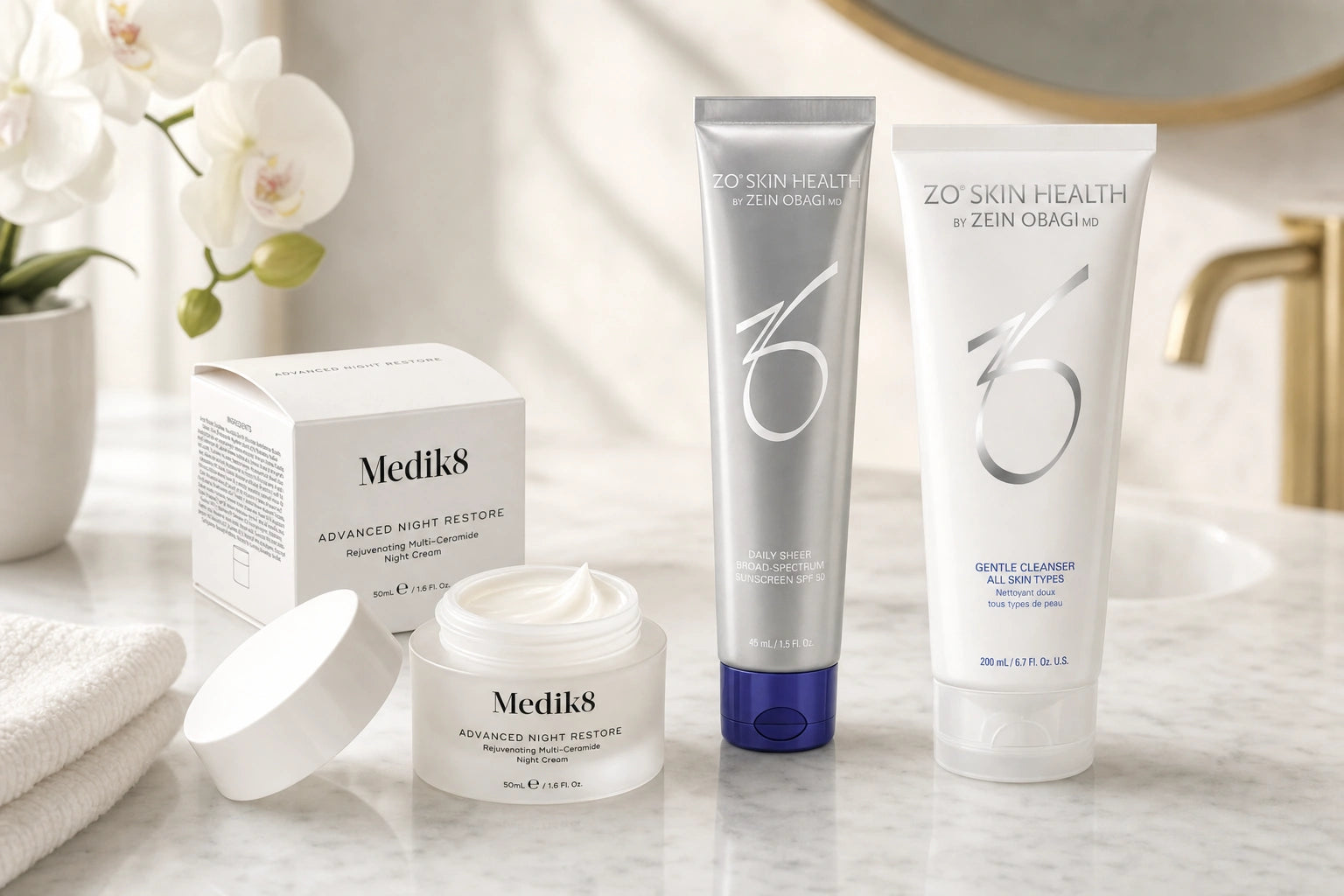
- Cleanse — remove makeup, sunscreen, and daily buildup with a gentle pH-balanced cleanser.
- Tone (optional) — if you use a hydrating toner, apply it now and let it absorb fully.
- Wait for dry skin — damp application increases absorption and irritation risk. Let your face dry completely, 5–10 minutes.
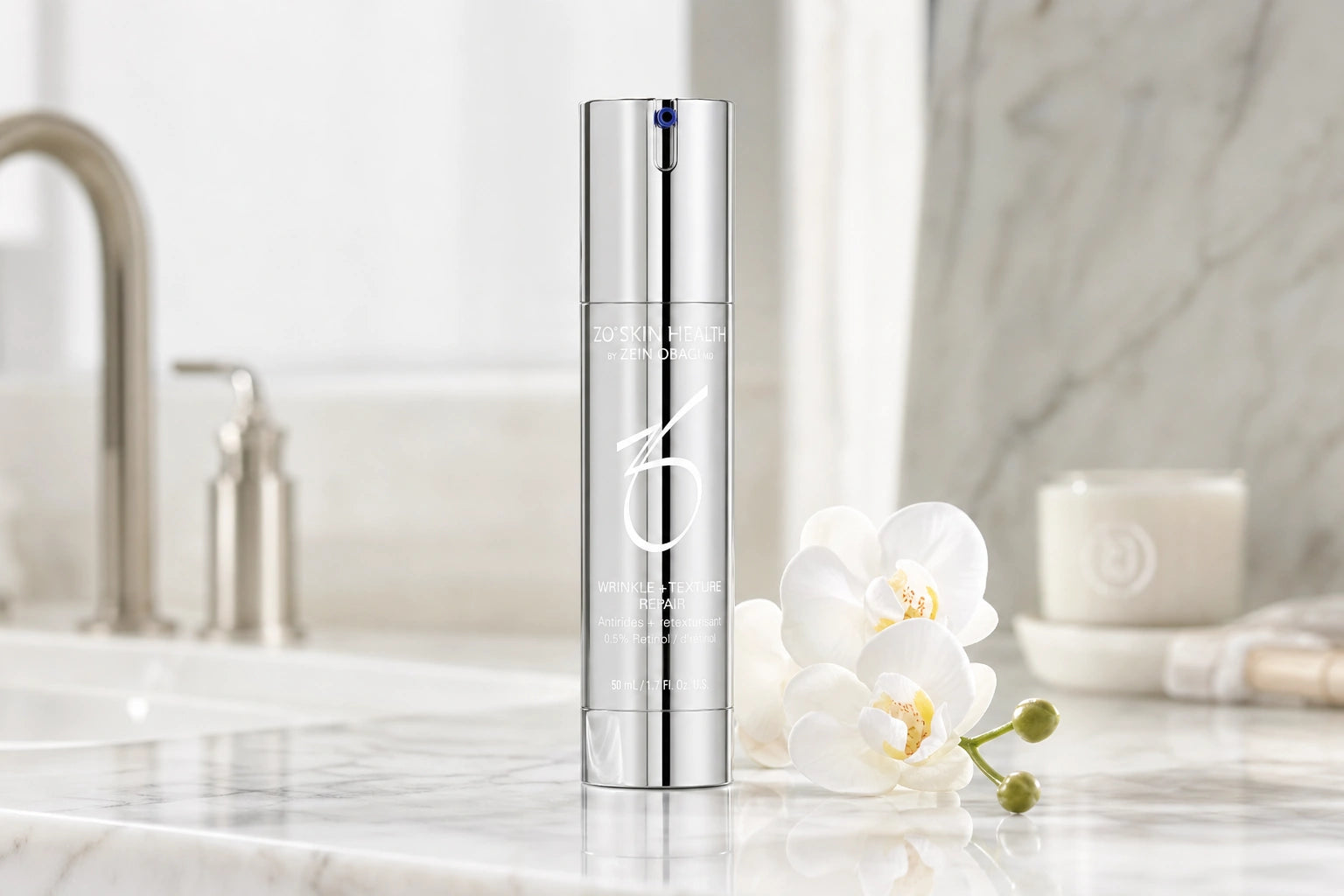
- Apply retinol — Wrinkle + Texture Repair (1% retinol in a microemulsion delivery system) goes on clean, dry skin. Use a pea-sized amount for the entire face. Start 2 times weekly for month one, build to 4–5 times weekly by month two, daily by month three if tolerated. The microemulsion stabilizes the retinol and prevents oxidation while maintaining efficacy — this is what professional formulas deliver that mass-market can't.
- Wait 20 minutes — if your skin feels tight, wait before applying moisturizer. This optional buffer reduces irritation without compromising results.
- Moisturize — seal everything in with a hydrating, barrier-supportive cream.
Morning (The SPF Non-Negotiable)
- Cleanse — gentle, non-stripping cleanser.
- Antioxidant serum (optional) — vitamin C or niacinamide if your routine includes it.
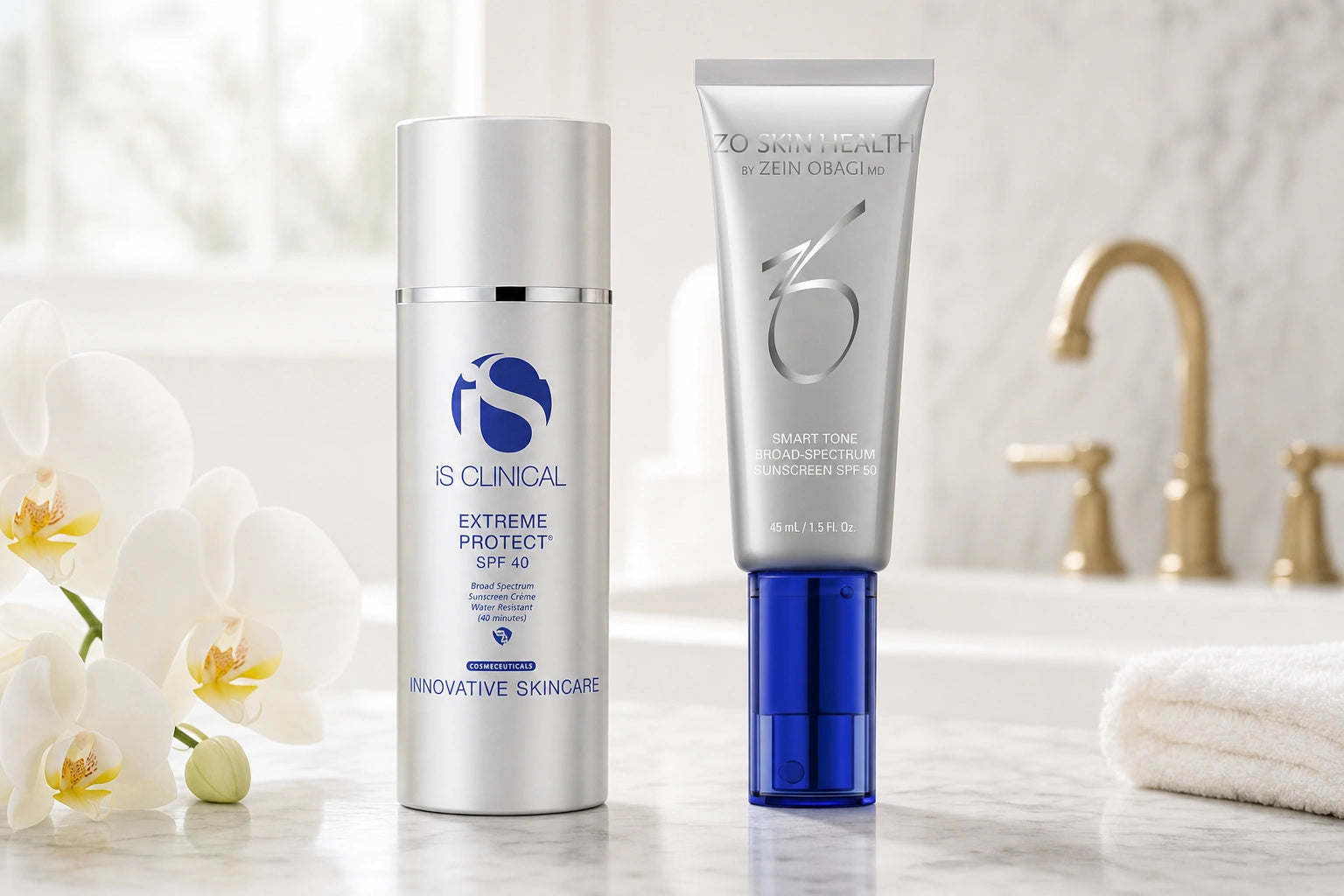
- SPF 50 broad-spectrum — mandatory. Retinol increases sun sensitivity — apply SPF every morning, no exceptions. Choose a formula you'll actually wear daily.
Strength progression: Start at 0.3% retinol or 0.01% retinal. Move to 0.6% retinol or 0.03% retinal at month 4–6 if your skin has adapted without persistent irritation. Consider 1% retinol or 0.1% retinal after 6–12 months of consistent use. See our guide on how to choose the right retinol strength for detailed progression planning.
Safety note: Retinol is contraindicated during pregnancy and breastfeeding — do not use any retinol, retinal, or tretinoin product if pregnant, planning pregnancy, or nursing. Retinoids increase photosensitivity — daily SPF 50 broad-spectrum is non-negotiable. Do not combine retinol with AHAs, BHAs, or vitamin C in the same evening routine — retinol is sufficient on its own, and layering acids increases irritation without added benefit.
What Professional-Grade Retinol Gives You That Mass-Market Can't
Concentration accuracy. ZO Skin Health and Medik8 state exact percentages on the label — you know you're getting 1% retinol or 0.06% retinal. Pharmacy brands often list retinol somewhere in the ingredient deck without disclosing concentration, which means you're guessing.
Stabilization and delivery. Microemulsion systems (ZO) and time-release encapsulation (Medik8) prevent oxidation — retinol degrades fast when exposed to light and air. Professional formulas keep it stable until it reaches your dermis. Mass-market jars sitting on a shelf for six months? The retinol's already breaking down.
Supporting actives in the same formula. Peptides, ceramides, and niacinamide offset dryness and accelerate barrier repair. You're not just getting retinol — you're getting a system designed to deliver results while minimizing downtime.
This is why dramatic before-after photos come from professional formulas. The retinol is actually reaching the dermis at the stated concentration. For more on professional-grade retinol options, see the Medik8 retinol and retinal strength guide.
Contraindications and Safety Warnings
Pregnancy and breastfeeding: Retinoids are contraindicated. Do not use any retinol, retinal, or tretinoin product if you are pregnant, planning pregnancy, or breastfeeding. This is a strict regulatory and safety requirement.
Photosensitivity: Retinoids thin the stratum corneum temporarily and increase UV sensitivity. SPF 50 broad-spectrum every morning is mandatory — non-negotiable, no exceptions. Mediterranean countries (Portugal, Spain, Italy, France) have high UV year-round, making daily SPF essential when using retinoids. Learn more about why SPF is essential when using retinoids.
Gradual introduction: Start 2–3 times weekly and build up over 4–6 weeks to avoid excessive peeling and barrier compromise. Jumping to daily use immediately guarantees irritation.
Avoid combining with acids: Do not layer retinol with AHAs, BHAs, or high-strength vitamin C in the same evening. Retinol is sufficient on its own — adding acids increases irritation without improving results.
For additional safety information, see the FDA cosmetic ingredients page.
Frequently Asked Questions
How long does it take to see results from retinol?
You'll notice smoother texture and refined pores at 3–6 weeks. Fine lines soften at 2–3 months. Visible wrinkle reduction and faded pigmentation appear at 4–6 months. Retinal works faster — expect similar results 30–40% sooner. Start slow, build frequency gradually, and pair with daily SPF for consistent progress.
What works 11 times faster than retinol?
Retinal (retinaldehyde). It's one enzymatic conversion away from retinoic acid, while retinol requires two steps. Medik8 Crystal Retinal uses stabilized retinaldehyde — you'll see texture improvement weeks sooner than with standard retinol, with less irritation during the adjustment phase. It's the middle ground between over-the-counter retinol and prescription tretinoin.
Is 40 too late for retinol?
No. Retinol works at any age because it stimulates collagen synthesis and accelerates cell turnover — both decline naturally with age. Starting at 40+ means you'll see visible improvement in wrinkle depth and skin firmness within 3–6 months. Begin with 0.3% retinol or 0.01% retinal and build up gradually. Your skin's repair mechanisms are still active; retinol reactivates what's been slowing down.
Can I use retinol if I have sensitive skin?
Yes, but choose retinal over retinol and start with the lowest strength. Medik8 Crystal Retinal 1 (0.01%) or bakuchiol-based formulas offer gentler alternatives that still deliver visible results. Introduce 2 times weekly, buffer with moisturizer if needed, and avoid layering with acids. Sensitivity often resolves after 4–6 weeks as your skin adapts to the increased turnover rate.