Cart
0
You've probably heard of DMK if you spend time around professional treatment rooms in Spain, Italy, or France — it's the line with the enzyme masques that make your face pulse. Literally.
DMK isn't your typical cosmetic skincare. It's a paramedical brand built around a methodology called Remove, Rebuild, Protect, Maintain, and it requires certified aestheticians to prescribe products and perform treatments. If you're used to browsing a pharmacy shelf and picking what looks good, DMK won't make sense to you. But if you have chronic reactive skin, post-procedure redness, or a barrier that's been compromised by overexfoliation — this is the brand European clinics reach for first.
Here's what you need to know before investing.
What DMK Skincare Actually Is (And How It's Different)
DMK was founded by Danne Montague-King over 50 years ago with a clear philosophy: work with the skin's chemistry rather than against it. The brand positions itself as paramedical-grade — professional formulations designed to match skin's natural processes, not just mask symptoms temporarily.
Here's what separates DMK from standard cosmetic lines:
- Professional-only distribution — you can't buy DMK products through open retail channels. Aestheticians must complete DMK certification before they can prescribe home products or perform in-clinic treatments.
- Condition-specific protocols — DMK organizes around skin concerns (barrier compromise, pigmentation, congestion) rather than product types (cleansers, serums, moisturizers).
- Paramedical framing — this term means formulations that sit between cosmetics and pharmaceuticals. They're still regulated as cosmetics under EU Regulation 1223/2009, so no therapeutic claims are permitted — but ingredient concentrations and delivery systems often exceed what you'd find in pharmacy brands.
I see DMK most often in Mediterranean clinics where UV exposure is high and barrier support is paramount. Clients in their 40s and 50s with sun damage and sensitivity make up the bulk of the DMK user base here in Portugal.
DMK Enzyme Therapy: What It Does (And What the Research Shows)
DMK enzyme therapy is the brand's signature in-clinic treatment — a masque that creates what DMK calls the plasmatic effect. Your face visibly pulsates as the enzymes work. It's not a marketing trick — it's oxygenation and lymphatic drainage in action.
The enzyme masque is designed to support skin's natural waste removal and microcirculation. Beta-glucan (a polysaccharide from yeast cell walls) features heavily in DMK formulations, including the enzyme protocols. Deters et al. (2008), International Journal of Pharmaceutics, showed that beta-glucan enhances Langerhans cell maturation — essentially supporting skin's immune function and ability to self-regulate.
What I observe in practice: post-enzyme skin looks plumper, less congested, and brighter for 3–5 days. The effect fades because enzyme therapy is a temporary boost, not a corrective treatment. Pair it with DMK home prescriptives and you extend the result. Use it as a one-off facial treat? You won't see sustained change.
DMK Betagen Cream: The Emergency Cream for Compromised Barriers
Betagen is DMK's emergency cream — formulated for reactive, inflamed, or hypersensitive skin. It centers on beta-glucan combined with shea butter, safflower oil, and a peptide duo to support barrier repair.
Key ingredients:
- Beta-glucan — humectant and immune modulator. Reduces UV-induced redness and supports Langerhans cell activity.
- Shea butter — concentrated in stearic and oleic acids. Prevents transepidermal water loss and delivers anti-inflammatory phytosterols.
- Safflower oil — high in linoleic acid, a structural component of cell membranes. Lightweight, anti-inflammatory, vitamin E–rich.
- Retinyl palmitate — a gentler vitamin A ester, but still increases photosensitivity. Daily SPF 30+ is mandatory.
Who benefits: post-peel skin, post-laser recovery, chronic rosacea-prone types, environmental stress from Mediterranean UV exposure, clients with sluggish circulation who can't tolerate actives.
Texture: light cream with dimethicone slip. Non-greasy despite shea content. Suitable for layering under SPF.
What it doesn't do: it's not an active treatment for acne, deep wrinkles, or hyperpigmentation. Betagen is supportive care for stressed skin — not corrective.
Is DMK Worth It? What You're Paying For (And What You're Not)
DMK's price point reflects its professional model. You're paying for:
- Raw material quality — high-purity ingredients, advanced delivery systems, synergistic formulation rather than single-hero actives.
- Professional consultation — certified aestheticians prescribe based on your specific barrier state, not a generic skin type.
- Quality control — the certification requirement limits accessibility but ensures consistent application of protocols.
What separates DMK from mass-market brands: pH precision, ingredient synergy, professional-guided protocols that account for your current barrier function — not just your age or concern category. For more on barrier repair strategies, see our guide.
What it's not: a miracle cure, a replacement for medical dermatology in severe cases (active eczema flares, allergic contact dermatitis), or a one-size-fits-all retail solution.
Clinic anecdote: I've seen clients with chronic rosacea-prone skin achieve visible redness reduction after 6–8 weeks on Betagen paired with monthly enzyme therapy. But the results require consistency and professional oversight — not a product you buy once and hope for the best.
How to Integrate DMK into a Professional Routine
Before adding any new active, patch test on the inner forearm for 48 hours.
Here's how to use Betagen Cream in a daily routine — one product, properly placed.
Evening Routine with DMK Betagen Cream
- Cleanse with a pH-balanced formula (avoid stripping sulfates)
- Apply prescribed serum if you're using one — antioxidants or peptides work well here
- Dispense 2–3 pumps Betagen Cream onto face, neck, décolleté
- Mist with toner and press in until absorbed
Morning SPF Protection (Mandatory)
- Cleanse gently
- Apply antioxidant serum (vitamin C pairs well with retinyl palmitate)
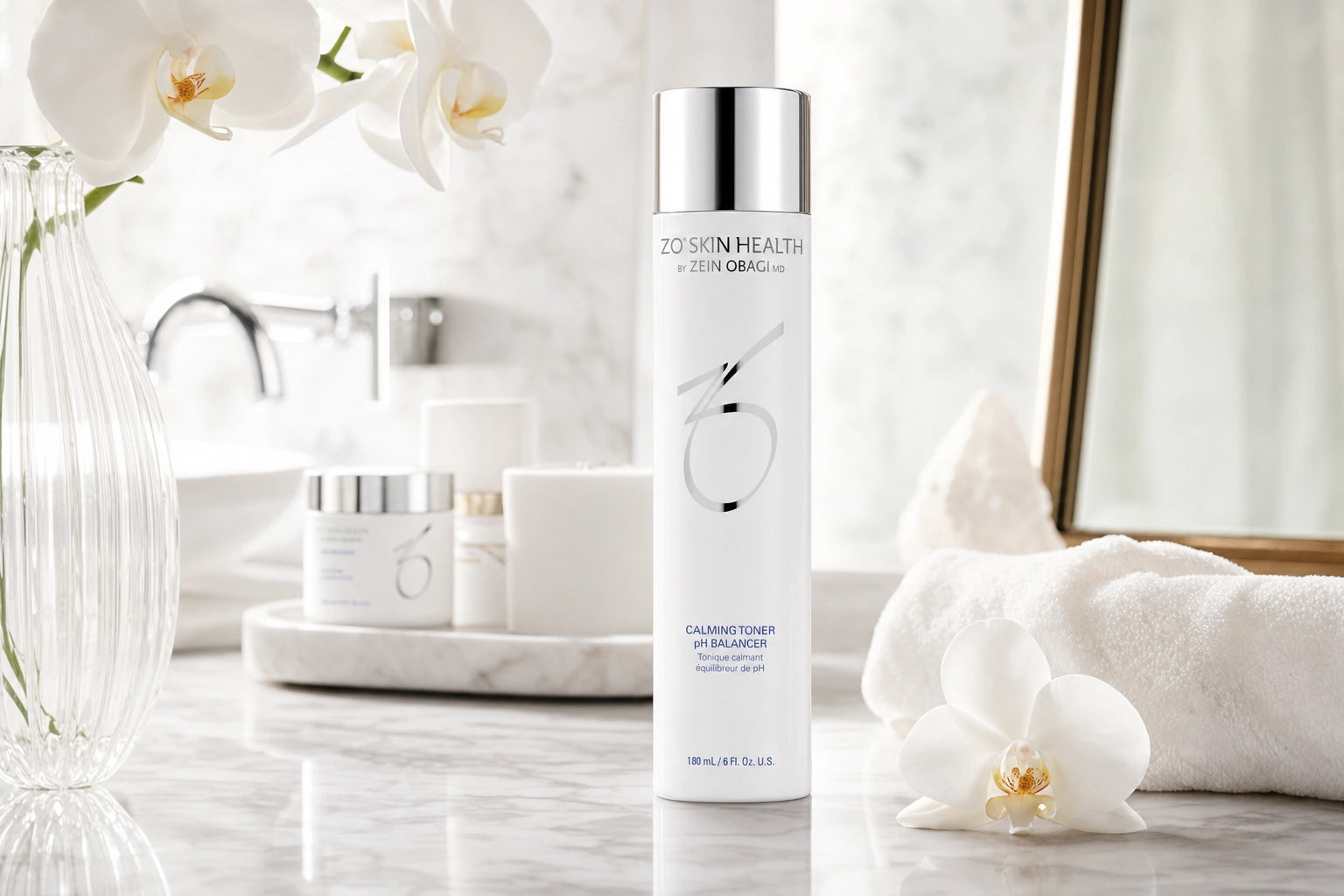
- Follow with the Calming Toner to refresh and balance pH after cleansing
- Apply Tint du Soleil Whipped Mineral Foundation SPF 30 — mineral formula suitable for sensitive, post-treatment skin. The retinyl palmitate in Betagen increases UV sensitivity, so SPF 30+ is non-negotiable every morning.
Photosensitivity note: Retinyl palmitate increases sun sensitivity. Start with evening-only use if your skin is very reactive, then introduce to morning routine once tolerance is established. Daily SPF is mandatory. For more on year-round SPF protection, see our SPF guide.
Frequency: Daily for acute barrier support. Scale back to 3–4 times weekly once stability returns.
Weekly treatment slot: DMK enzyme therapy in-clinic monthly or DMK exfoliating masque at home (if prescribed by your aesthetician).
DMK Versus Standard Cosmetic Skincare: The Actual Difference
DMK's professional model means tailored prescriptions rather than one-size-fits-all retail. Ingredient concentrations and delivery systems often exceed pharmacy brands — but we're still within cosmetic regulation, not pharmaceutical.
Regulation reminder: DMK is a cosmetic line under EU 1223/2009, despite the paramedical framing. No product can treat, cure, or heal a condition. What DMK offers is formulations designed to support skin's natural barrier function, hydration, and renewal — not therapeutic intervention.
When DMK makes sense:
- Chronic reactive skin that hasn't responded to standard redness-relief moisturizers
- Post-procedure care (peels, lasers, microneedling)
- Clients who've plateaued on simpler regimens and need professional oversight
When it doesn't:
- Budget constraints — DMK is premium-priced
- Preference for self-directed retail shopping
- Mild concerns manageable with over-the-counter solutions
Professional brands like DMK deliver raw-material quality, advanced delivery technology, and formulation synergy you won't find in mass-market lines. But they require commitment — both financial and time — to see results.
Frequently Asked Questions
Is DMK a good skin brand?
DMK is a professional-grade paramedical line respected in European clinics for enzyme therapy and barrier-support formulations. It's effective for reactive, compromised skin when used under professional guidance — but it's not a mass-market brand you can trial casually. The investment makes sense if you have chronic sensitivity or haven't seen results from standard cosmetic lines.
Does DMK really work?
Yes, for specific concerns — particularly barrier compromise, post-procedure recovery, and reactive skin. DMK's enzyme therapy improves microcirculation temporarily, and home products like Betagen support barrier repair with beta-glucan and essential fatty acids. Results depend on professional prescription accuracy and consistent home use.
Is DMK enzyme therapy worth it?
Worth it if you have congested, sluggish, or reactive skin and access to a certified DMK aesthetician. The plasmatic effect visibly improves circulation and lymphatic drainage for 3–5 days. Pair with DMK home prescriptives for best results. Not worth it as a one-off facial treat — this is a professional protocol, not a spa indulgence.
What does paramedical skincare mean?
Paramedical skincare sits between cosmetics and pharmaceuticals — professional-grade formulations designed to support skin function without requiring a prescription. DMK is paramedical: higher active concentrations, delivery systems targeting specific pathways, and professional consultation required. Still regulated as cosmetics under EU 1223/2009, so no therapeutic claims are permitted.
DMK skincare delivers when you need professional-grade barrier support, enzyme-driven microcirculation, and a systematic approach to reactive skin. It won't replace medical treatment for severe conditions, and it's not for casual retail browsing. But if you've tried everything else and your barrier remains compromised — DMK's 50-year methodology and European clinic track record make it worth the consult.