Cart
0
What HydroPeptide Solar Defense Tinted SPF 30 Promises (And Why We Don't Carry It)
You're looking for a tinted mineral sunscreen that won't settle into fine lines, and HydroPeptide Solar Defense keeps appearing in your searches. Fair enough — it's a zinc oxide SPF 30 with peptides, positioned as anti-aging protection with sheer coverage. But here's the reality: we don't stock it at Baza, and that's not an oversight.
HydroPeptide's supply chain into Portugal, Spain, Italy, and France is limited, and brand availability in the European professional market is patchy. Rather than carry a product we can't reliably restock, we've chosen alternatives that deliver equal or superior results — with higher SPF ratings, broader-spectrum defense, and formulations built for the Mediterranean UV environment.
The Core Formula: Zinc Oxide + Peptides + Antioxidants
HydroPeptide Solar Defense relies on zinc oxide for UVA/UVB coverage, layered with peptides and antioxidants. It's a solid premise. Zinc oxide is a photostable physical blocker, and peptides support skin's natural renewal processes. The tint uses iron oxides to blur redness and even tone — think sheer veil, not foundation.
But SPF 30 is the minimum daily threshold. In Southern Europe, where UV indices hit 8–10 from May through September, SPF 30 requires diligent reapplication every two hours during extended outdoor exposure. That's where higher-SPF tinted formulas become practical — not just aspirational.
Why Tinted Sunscreens Have Become the Morning Step for Aging Skin
Tinted SPF solves two problems at once: UV defense and visible redness correction. Clients over 40 often ask for exactly this — they want coverage without foundation weight, something that evens tone while protecting.
Here's what I see on consult almost daily: someone in her late 40s who's dropped foundation because it emphasizes texture, but still wants a "finished" look. Tinted mineral sunscreen fills that gap. The iron oxides neutralize redness from rosacea or broken capillaries, zinc oxide blocks UV, and antioxidants mop up free radicals that slip past the filter. One step, three functions.
The Tinted SPF Alternatives We Actually Recommend (And Why)
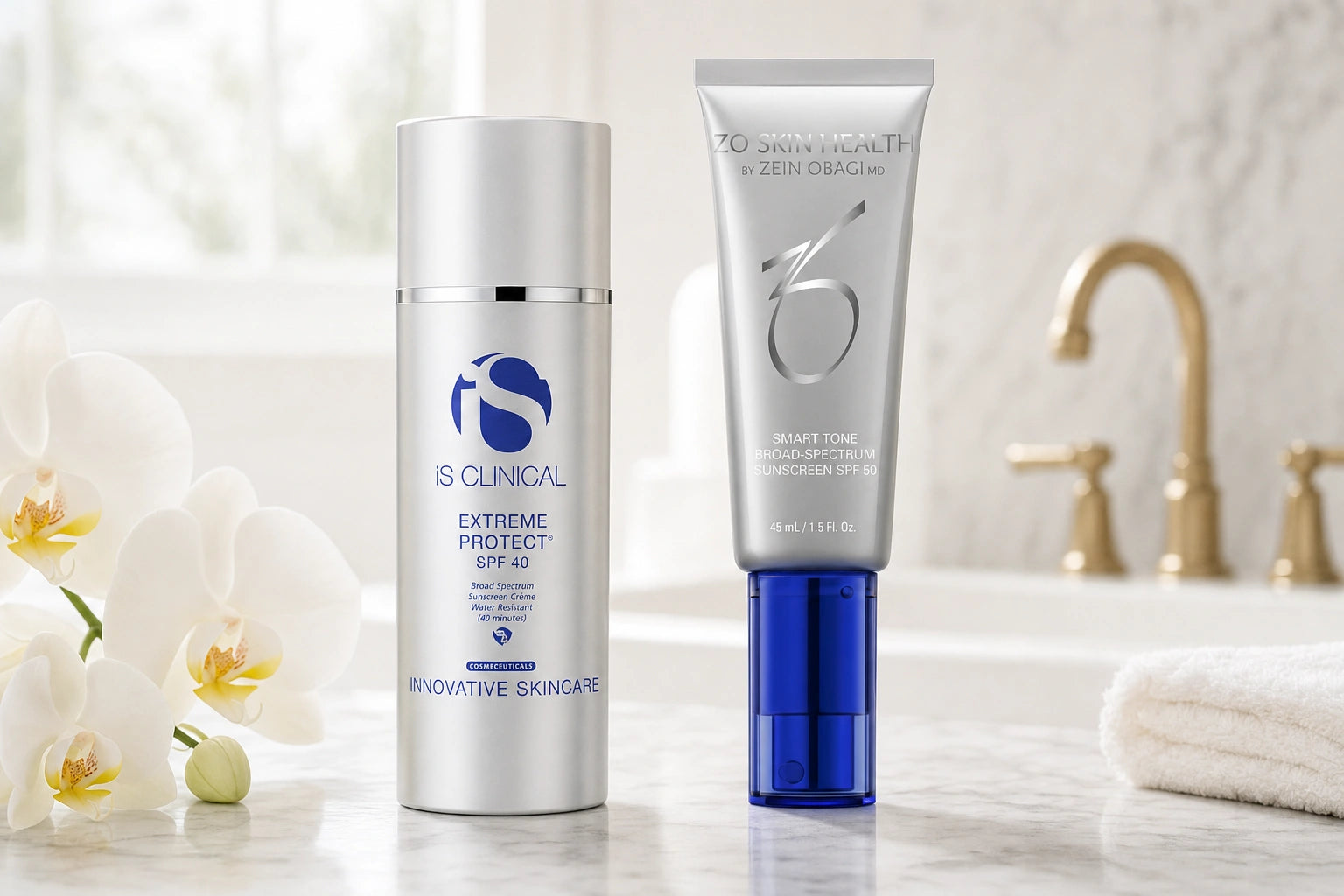
We carry two tinted mineral SPFs that consistently outperform HydroPeptide Solar Defense in client feedback: Smart Tone Broad-Spectrum SPF 50 from ZO Skin Health and Extreme Protect SPF 40 from iS Clinical. Both offer advantages you won't find in the HydroPeptide formula.
ZO Smart Tone Broad-Spectrum SPF 50: Self-Adjusting Tint + Higher Protection
The ZO option is my go-to for aging skin that needs daily wear-and-go simplicity. It delivers SPF 50 with Triple-Spectrum Protection — UVA, UVB, infrared-A (IR-A), and high-energy visible (HEV) light. That's broader than standard zinc oxide alone.
The self-adjusting tint is what sets it apart. Unlike fixed-shade formulas, this one adapts to most Fitzpatrick I–IV tones without looking ashy or orange. It's lightweight, hydrating, and leaves a natural finish that photographs well — critical if you're on video calls all day. The exclusive antioxidant complex (vitamin E, ubiquinone, resveratrol) works alongside the physical filters to neutralize oxidative stress.
Singh et al. (2013), Photochemistry and Photobiology, demonstrated that micronized zinc oxide provides superior broad-spectrum efficacy when particle size drops below 200 nanometers. Professional brands engineer for this — pharmacy tinted SPFs often skip the micronization step, which is why they leave a white cast.
iS Clinical Extreme Protect SPF 40: Advanced Antioxidant Defense
The iS Clinical formula uses Extremozyme technology — enzymes derived from extremophiles (organisms that thrive in harsh environments). These enzymes help support skin's defenses against environmental stressors, from UV to pollution.
It combines micronized zinc oxide and micronized titanium dioxide for transparent, broad-spectrum coverage. The antioxidant backing is extensive: vitamin E, green tea polyphenols, ubiquinone. It's richer than the ZO, so it works well for clients with dry or dehydrated skin who find matte finishes uncomfortable.
Both products use peptides indirectly (through antioxidant support) rather than as a headline ingredient. The result? You're comparing HydroPeptide's peptide blend to ZO's antioxidant complex and iS Clinical's Extremozymes. All three aim to mitigate oxidative stress — different pathways, same goal.
Tinted SPF Downsides (What the Marketing Doesn't Tell You)
Tinted sunscreens aren't perfect. They can oxidize during the day, especially on oily skin — that fresh-applied beige turns orange or grey by 3 PM. The tint is sheer coverage, not concealment. It'll even redness and minor discoloration, but it won't hide hyperpigmentation, acne marks, or pronounced rosacea flares.
Mineral tints can leave a slight cast on deeper skin tones. Universal tints work for Fitzpatrick I–IV, but V–VI often find them too light or ashy. In those cases, a transparent chemical SPF is the better call — though you lose the iron-oxide redness correction.
You still need the full quarter-teaspoon for face and neck. Don't skimp because it blends nicely — under-application means inadequate protection. I've seen clients apply tinted SPF like a tinted moisturizer (thin layer, patted in) and wonder why they burn after two hours at the beach. Application amount matters.
Here's a clinic observation: clients who expect full coverage are disappointed. Those who want "my skin but better" love it. Set your expectations accordingly.
A Morning Routine with ZO Smart Tone SPF 50 (Mature Skin Example)
Before adding any new active, patch test on the inner forearm for 48 hours. Once cleared, here's how to integrate a tinted SPF into your daily ladder:
- Cleanse: Use a gentle cleanser for mature skin — pH-balanced, no sulfates. Rinse with lukewarm water, pat dry.
- Antioxidant serum (optional): Vitamin C or a peptide blend. This step is optional but recommended for layering — antioxidants work synergistically with SPF. Allow 60 seconds to absorb.
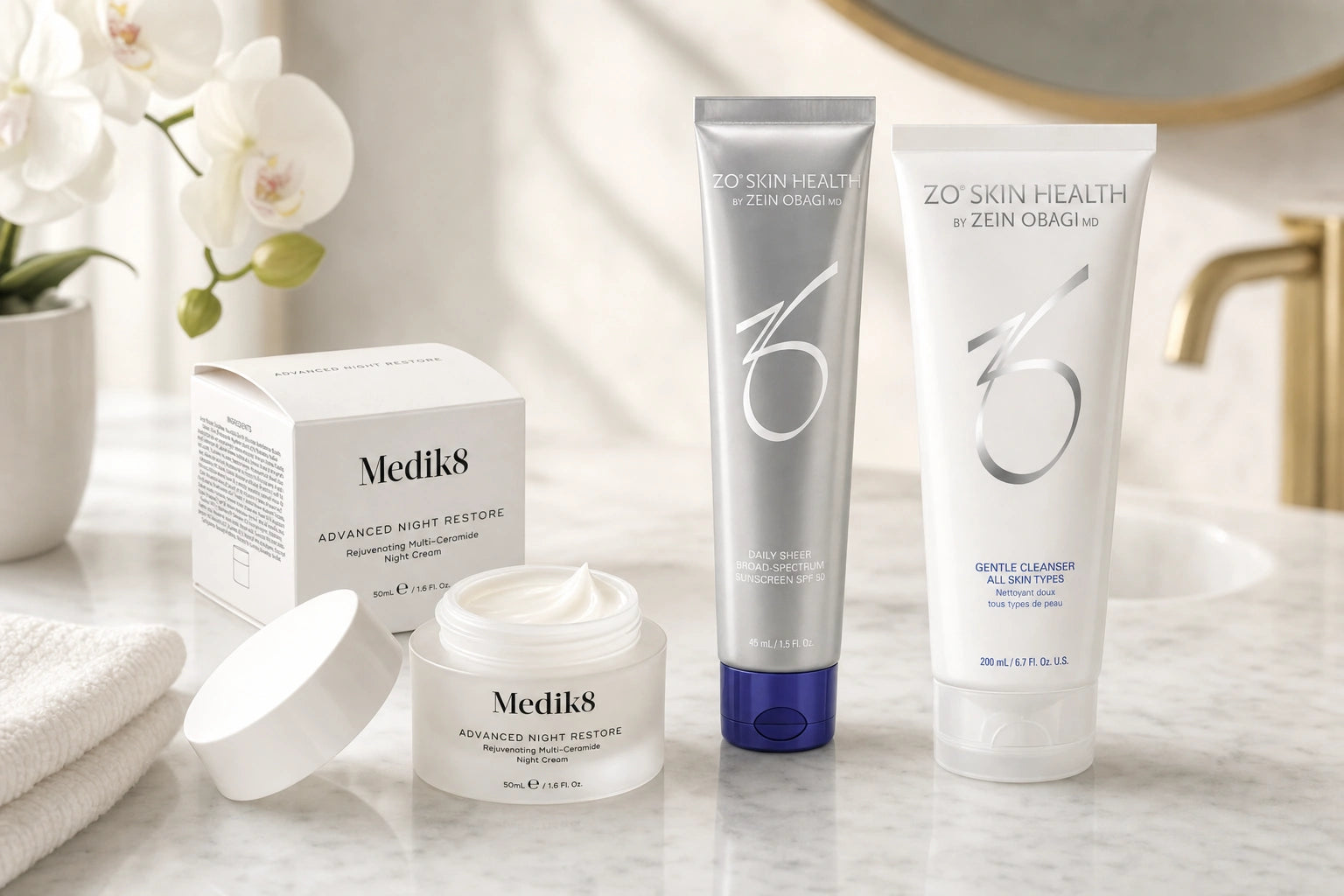
- Tinted SPF: Apply a quarter-teaspoon of the ZO formula to face and neck. Blend upward to the hairline and down to the décolletage. The self-adjusting tint evens tone instantly.
If you're using retinol at night, morning SPF is non-negotiable — retinoids increase photosensitivity, making your skin more vulnerable to UV damage. Mediterranean countries have high UV indices from late spring through early autumn; SPF 50 offers a wider margin than SPF 30 for daily wear. For more on year-round SPF importance, see our dedicated guide.
Reapply every two hours if you're outdoors. Indoors, one application suffices for most office environments — though if you sit near a window, consider a midday touch-up with a powder SPF.
For detailed application techniques and sun-protection best practices, the American Academy of Dermatology sunscreen application guidance offers evidence-based protocols.
Professional Tinted SPF vs Pharmacy Brands: The Raw-Material Difference
Professional brands like ZO and iS Clinical use micronized zinc oxide — smaller particle size means less white cast and better blendability. Pharmacy tinted SPFs often use standard-grade zinc, which sits on the surface and leaves a chalky finish.
Antioxidant backing is another divider. Professional formulas layer antioxidants (vitamin E, ubiquinone, resveratrol, green tea polyphenols) beneath the UV filters to neutralize free radicals that penetrate despite physical blocking. Pharmacy brands skip this step — you get the SPF number, but not the oxidative-defense layer.
Stability matters, too. Professional formulas use encapsulation or time-release delivery to prevent active degradation in the bottle. Open a year-old pharmacy SPF and check the smell — if it's rancid, the oils have oxidized and the antioxidants are spent. Professional-grade packaging (airless pumps, opaque tubes) extends shelf life.
Price reflects particle engineering and high-purity cosmetic actives. You're paying for micronization, antioxidant complexity, and formulation stability — not just SPF number. The FDA sunscreen regulation overview outlines minimum SPF standards, but it doesn't mandate antioxidant support or particle-size optimization — that's where professional brands differentiate.
Who Should (And Shouldn't) Use Tinted Mineral SPF
Tinted mineral sunscreen works best for:
- Fitzpatrick skin types I–IV
- Aging skin (over 35) looking for lightweight daily coverage
- Rosacea-prone or redness-prone complexions — iron oxides neutralize visible redness
- Post-procedure recovery (chemical peels, microneedling, laser) when you need gentle, physical-only protection
- Anyone who wants a "finished" look without foundation weight
Skip tinted mineral SPF if:
- You have very deep skin tone (Fitzpatrick V–VI) — universal tints may not match or may leave an ashy cast
- You're acne-prone and sensitive to zinc oxide (can be comedogenic for some — though most modern formulas are non-comedogenic)
- You prefer a completely invisible finish — transparent chemical SPFs are better for that
Contraindication: if you're allergic to zinc or titanium dioxide, use a chemical SPF alternative. Patch test before committing.
Pregnancy and breastfeeding note: mineral SPFs (zinc oxide, titanium dioxide) are generally considered safe. Chemical filters like avobenzone and oxybenzone are debated in some regulatory contexts — mineral is the safer bet if you're cautious.
I see clients in their 50s who've switched from foundation to tinted SPF entirely — less makeup, more protection, same polished look. It's a practical shift for anyone who's tired of layering products.
For guidance on selecting sunscreen for specific skin concerns like uneven tone, see our article on sunscreen for uneven skin tone.
Frequently Asked Questions
Is HydroPeptide a brand of tinted sunscreen?
HydroPeptide is a professional skincare brand that makes Solar Defense Tinted SPF 30, a mineral sunscreen with peptides and antioxidants. It's not exclusively a sunscreen brand — HydroPeptide's range includes serums, cleansers, and treatments. We don't carry it at Baza, but we stock comparable tinted SPFs from ZO Skin Health and iS Clinical with higher SPF ratings and advanced antioxidant complexes.
What are the downsides of using tinted sunscreen?
Tinted sunscreens can oxidize during the day — turning orange or grey, especially on oily skin. The tint provides sheer coverage, not full foundation-level concealment. On deeper skin tones, universal tints may leave an ashy cast. You still need to apply the full recommended amount (quarter-teaspoon for face and neck), even if it blends nicely — under-application means inadequate protection.
What is the best tinted SPF for mature skin?
For mature skin, look for SPF 40–50 with antioxidants and hydration. ZO Smart Tone Broad-Spectrum SPF 50 is excellent — self-adjusting tint, lightweight feel, and Triple-Spectrum Protection against UVA/UVB/IR-A/HEV light. iS Clinical Extreme Protect SPF 40 offers Extremozyme technology for oxidative defense. Both are formulated for aging skin and won't settle into fine lines like heavier foundations.
Does tinted sunscreen provide enough coverage to skip foundation?
Tinted sunscreen offers sheer, tone-evening coverage — not full concealment. It evens redness and minor discoloration but won't hide hyperpigmentation, acne marks, or pronounced redness. Many clients over 40 use it as a standalone for a no-makeup look, but if you need more coverage, layer foundation on top. The SPF is your non-negotiable base; the tint is a bonus.