Cart
0
You've stripped your barrier without knowing it. That tight, squeaky-clean feeling after cleansing? It's not purity — it's damage. A gentle facial cleanser changes the equation: it removes sunscreen, pollution, and makeup without disrupting the acid mantle or pulling moisture from your stratum corneum. The difference isn't texture or foam. It's chemistry.
In my clinic, I see this pattern weekly — clients switch from a drugstore foaming cleanser to a pH-balanced formula with amino acid surfactants, and within five days, the tightness vanishes. No other changes to their routine. Just one swap.
Here's what makes a cleanser gentle, who needs one, and how to pair it with retinoids or acids without compounding irritation.
What Makes a Cleanser "Gentle"
Surfactant Chemistry Explained
Gentle cleansers avoid traditional sulfates — sodium lauryl sulfate (SLS) and sodium laureth sulfate (SLES) — which strip lipids and raise skin pH to alkaline levels. Instead, they use mild surfactants:
- Amino acid-based surfactants (sodium cocoyl glycinate, potassium cocoyl glycinate) — biomimetic, low irritation
- Glucosides (decyl glucoside, coco-glucoside) — plant-sugar-derived, non-ionic
- Betaines (cocamidopropyl betaine) — amphoteric, mild with foam-boosting properties
These molecules have larger structures and lower critical micelle concentrations, so they clean effectively at lower doses — reducing irritation risk. Kim et al. (2020), Skin Research and Technology, compared surfactant types over 14 days and found that formulas using amino acid-based cleansing agents reduced transepidermal water loss (TEWL) by 22% versus SLS-based foaming cleansers.
Foam doesn't equal efficacy. High lather is a marketing cue, not a performance metric.
The pH Factor
Your skin's acid mantle sits between pH 4.5 and 5.5 — a slightly acidic environment that defends against environmental stressors and microbial colonization. Traditional soaps clock in at pH 9–10, disrupting this balance. Lambers et al. (2018), Journal of Investigative Dermatology Symposium Proceedings, confirmed that cleansers with pH above 6.5 measurably increase TEWL and compromise stratum corneum cohesion.
A non-stripping cleanser maintains pH 4.5–5.5. That preserves barrier function.
Who Needs a Gentle Facial Cleanser
Barrier-friendly cleansers suit all skin types, but they're critical for:
- Sensitive or reactive skin (rosacea, eczema, atopic dermatitis)
- Post-procedure recovery (after chemical peels, microneedling, laser treatments)
- Retinoid users — to avoid compounding irritation
- Dry or dehydrated skin — to prevent further lipid depletion
- Normal skin in high-UV climates (Portugal, Spain, Southern France, Italy) where daily SPF and pollution exposure demand thorough but gentle cleansing
Even oily or acne-prone skin benefits. Over-cleansing triggers reactive sebum production — a rebound effect that worsens congestion. In consults, I see retinoid users who double-cleanse with harsh formulas experience flaking by day ten. Switch to a pH-balanced formula and that stops.
Choosing the Right Gentle Cleanser for Your Skin
Gel vs Cream vs Oil Cleansers
Gentle cleansing comes in several formats:
- Gel cleansers — lightweight, clear or translucent, rinse cleanly without residue
- Cream or lotion cleansers — milky, emollient-rich, leave a soft finish
- Oil or balm cleansers — lipid-based, used in double-cleansing methods to dissolve makeup and SPF before a water-based second pass
The designation refers to formulation, not texture. A foaming cleanser can be gentle if it uses amino acid-based surfactants; a cream cleanser can be harsh if it contains alkaline ingredients.
What to Look for on the Label
Ingredient checklist for a sensitive skin cleanser:
- Sodium cocoyl glycinate or potassium cocoyl glycinate
- Decyl glucoside or coco-glucoside
- Cocamidopropyl betaine
- Glycerin or hyaluronic acid for hydration
Red flags: SLS, SLES, high pH (check if the brand lists pH — anything above 6.5 is suspect), or alkaline buffers.
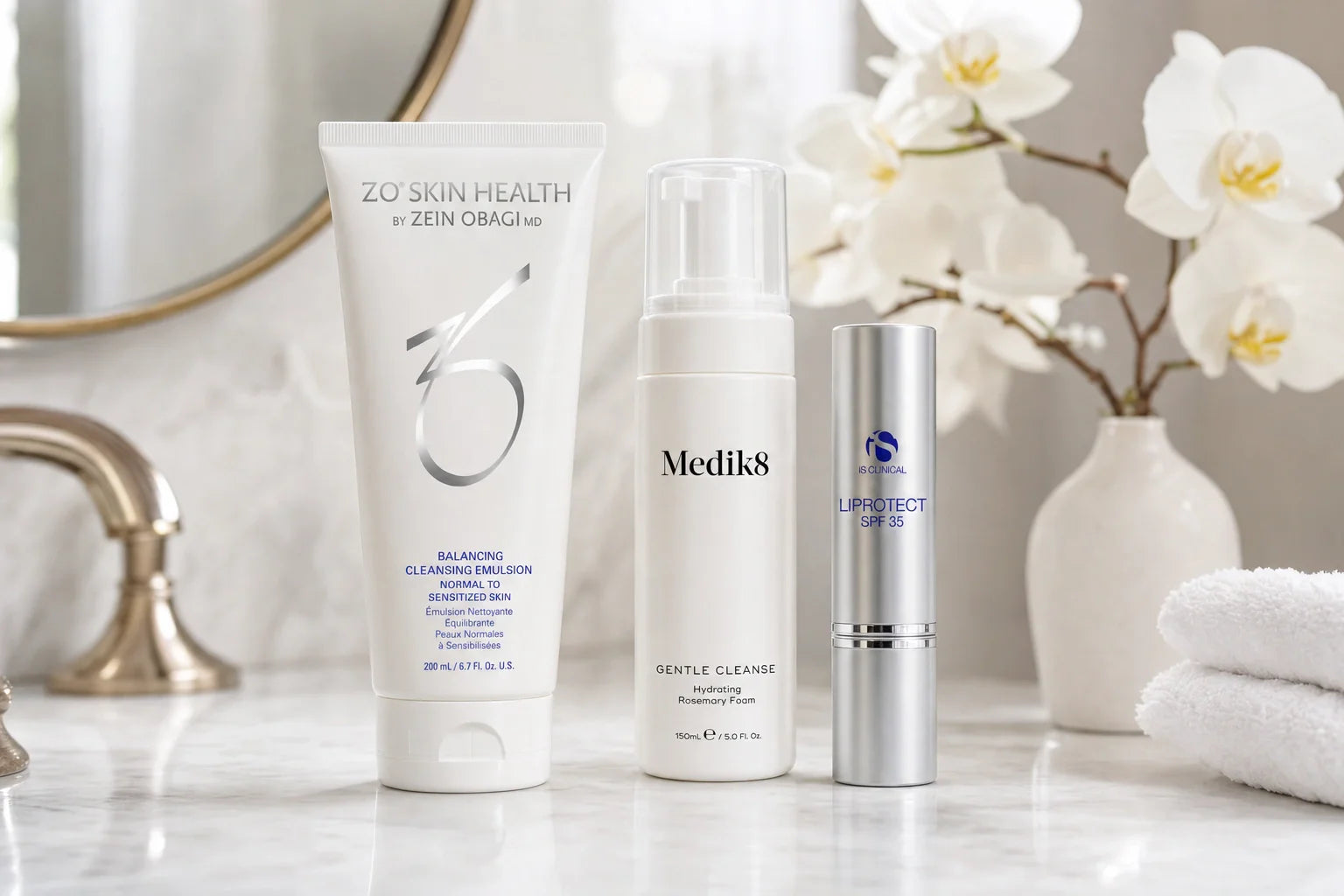
The Gentle Cleanse from Medik8 combines ultra-mild cleansing agents with chlorophyll and pH balancing, making it suitable even for post-procedure or rosacea-prone skin. It's fragrance-free and formulated to support barrier comfort while removing daily impurities.
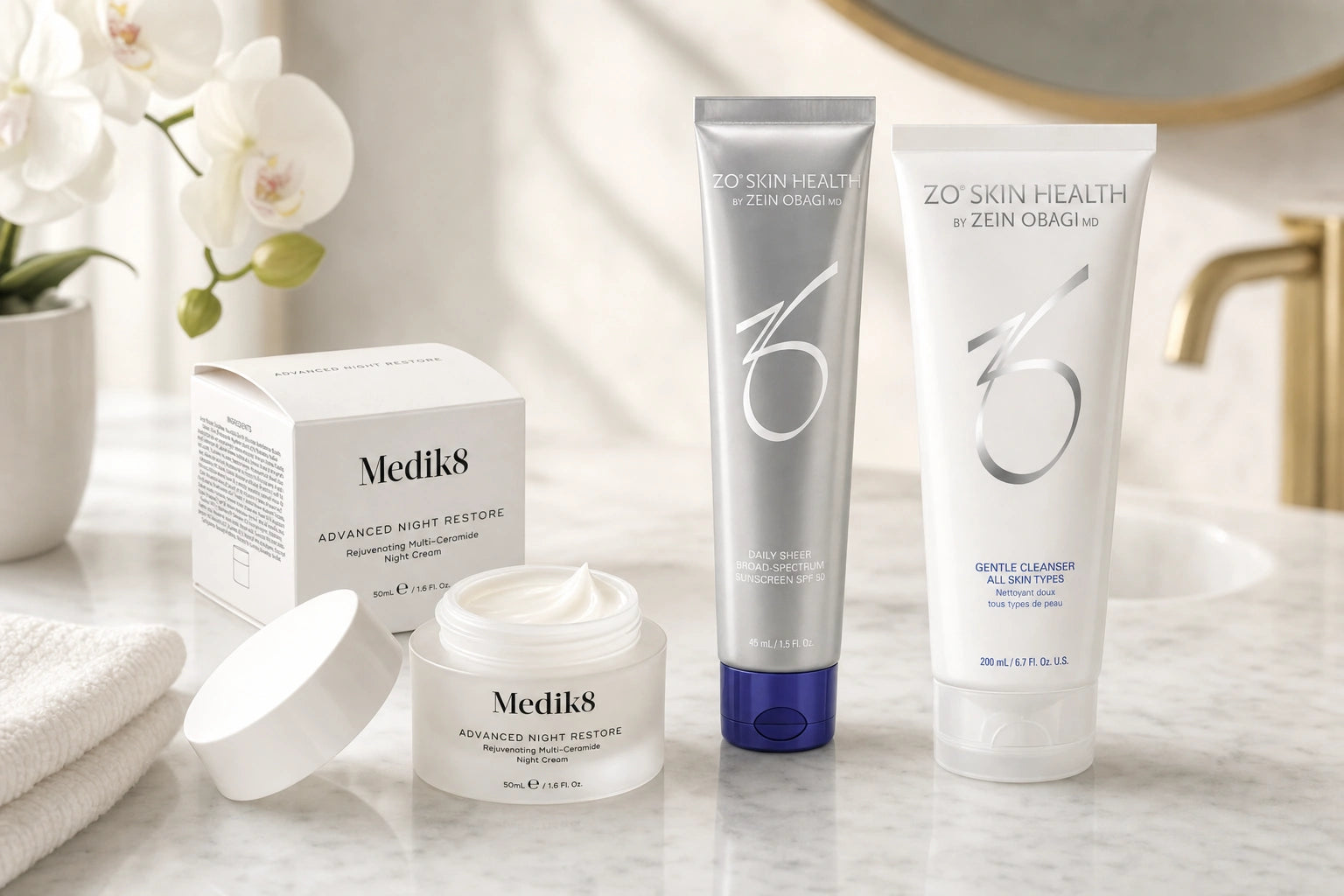
For heavy makeup or tenacious sunscreen removal, Balancing Cleansing Emulsion from ZO Skin Health works as a pre-cleanse. This gel-to-milk formula is fragrance-, dye-, and sulfate-free, designed to support the protective barrier while thoroughly dissolving waterproof formulations.
How to Use a Gentle Cleanser Without Compromising Efficacy
Proper technique maximizes cleansing power while minimizing disruption:
- Wet your face with lukewarm water — hot water increases TEWL
- Dispense 1–2 pumps (or a dime-sized dollop)
- Massage gently for 30–60 seconds in circular motions — no scrubbing
- Rinse thoroughly — residue left on skin can cause irritation
- Pat dry with a clean towel — rubbing inflames sensitive skin
For waterproof sunscreen or heavy makeup, use a double-cleanse protocol: oil-based first pass to dissolve lipophilic products, followed by your gentle water-based cleanser.
Frequency: Evening cleansing is non-negotiable to remove sunscreen, pollution, and sebum oxidation byproducts. Morning cleansing is optional — many aestheticians (myself included) recommend water-only or micellar water in the morning to preserve overnight barrier repair. Clients in their 40s often ask about morning cleansing; if you haven't used a heavy overnight treatment, skip it.
Twice-daily cleansing suits oily or acne-prone skin or when using heavy SPF formulations. Never cleanse more than twice daily — it strips your microbiome and triggers compensatory sebum production.
Pairing Your Gentle Cleanser with Active Treatments
Active ingredients demand strategic cleansing to avoid cumulative irritation.
Retinoids: A barrier-friendly cleanser prevents compounding dryness when you're using retinol, retinaldehyde, or tretinoin. Start your retinoid 2–3 times per week in the evening, build up gradually, and always follow with SPF in the morning. Retinoids increase sun sensitivity — apply SPF every morning without exception. For compromised skin, LIProtect SPF 35 from iS Clinical offers all-physical transparent sunscreen with vitamin E and elderberry extract to help defend from environmental stressors.
Before adding any new active, patch test on the inner forearm for 48 hours.
AHAs/BHAs: Use your gentle cleanser in the morning and apply your chemical exfoliant in the evening — never both in the same step. AHAs and BHAs also increase photosensitivity, so daily SPF 30+ is mandatory.
Post-procedure: Switch to a pH-balanced formula 48 hours before and continue for 7–14 days after chemical peels, microneedling, or laser treatments.
In Mediterranean countries like Portugal, Spain, Italy, and France, high UV exposure year-round makes daily SPF non-negotiable — especially when using photosensitizing actives. Pair your gentle cleanser with a named SPF product every morning.
Professional vs Mass-Market Gentle Cleansers
What differentiates professional brands like Medik8, ZO Skin Health, and iS Clinical? Raw material quality, active concentrations, delivery technology, and formulation consistency. You're not just paying for packaging — you're paying for stability, lower preservative loads, and professional-grade purity that mass-market cost constraints can't match.
This isn't about X is bad, Y is good. It's about understanding what you're buying. Professional formulas use higher-grade surfactants at precise pH levels, which means predictable results across batches.
In my clinic, switching from drugstore to a professional gentle cleanser often reduces visible redness within 7–10 days in reactive skin clients. Same routine otherwise. One product change.
For more on professional cleansing protocols, see our ZO Skin Health's Balancing Cleansing Emulsion guide. If you're pairing cleansing with retinoids, our retinol routine guide covers gradual introduction and frequency. For compromised barriers, explore our barrier repair strategies.
FAQ
What is the most gentle facial cleanser?
The gentlest cleansers use amino acid surfactants (sodium cocoyl glycinate) or glucosides (decyl glucoside) at pH 4.5–5.5. Medik8's Gentle Cleanse combines ultra-mild cleansing agents with chlorophyll and pH balancing, making it suitable even for post-procedure or rosacea-prone skin.
Which is the best gentle cleanser for sensitive skin?
Look for fragrance-free, sulfate-free formulas with amino acid surfactants and pH 4.5–5.5. ZO Skin Health's Balancing Cleansing Emulsion and Medik8's Gentle Cleanse are both formulated to support barrier function while removing impurities without irritation.
What cleanser should I use with retinoids?
Use a non-stripping, pH-balanced gentle cleanser to avoid compounding retinoid irritation. Avoid AHAs or BHAs in your cleansing step. Start retinoids 2–3 times per week in the evening, and always follow with SPF in the morning — physical sunscreens like iS Clinical's LIProtect SPF 35 work well for compromised skin.
Can a gentle cleanser remove sunscreen effectively?
Yes — use a double-cleanse method. Start with an oil or balm cleanser to dissolve SPF, then follow with a gentle water-based cleanser. ZO Skin Health's Balancing Cleansing Emulsion works as a pre-cleanse for heavy sunscreen, followed by a gentle gel or cream formula.
Your cleanser is the foundation of everything that follows. Get it wrong and even the best serum can't compensate. Get it right and your barrier has a fighting chance.