Cart
0
You've seen the term "mineral sunscreen" on labels and heard it recommended for sensitive skin, pregnancy, and post-procedure recovery. But what does it actually mean — and is it better than chemical formulas?
Mineral sunscreen isn't just marketing speak. It's a specific category of UV protection that works differently, looks different, and suits different skin states. If you've struggled with sunscreen irritation, have reactive skin, or want reef-safe options for European coastal summers, this is the formula type you need to understand.
Here's what makes mineral formulas distinct, who benefits most, and how to choose one that won't leave you looking like you walked through flour.
What Mineral-Based Sunscreen Actually Is
Mineral sunscreen — also called physical or inorganic sunscreen — uses two naturally occurring minerals as active ingredients: zinc oxide and titanium dioxide. Unlike chemical filters that absorb UV rays and convert them to heat, minerals sit on skin's surface and create a physical barrier that reflects and scatters both UVA and UVB light away from living tissue.
It's instant protection. No 20-minute wait period required.
Both zinc oxide and titanium dioxide are photostable — they don't degrade in sunlight, maintaining consistent coverage throughout wear time. Park et al. (2023), Photodermatology, Photoimmunology & Photomedicine, confirmed zinc oxide's dual function: UV protection and anti-inflammatory activity via reduced pro-inflammatory cytokine expression in UV-exposed keratinocytes. This makes zinc particularly valuable for reactive, inflamed, or post-treatment skin.
Zinc Oxide vs Titanium Dioxide
Zinc oxide provides true broad-spectrum protection across UVA and UVB wavelengths (290–400 nm). It's the more versatile of the two minerals.
Titanium dioxide offers strong UVB coverage but weaker UVA2 protection. It's often paired with zinc oxide or avobenzone to achieve full broad-spectrum status. Modern formulations use micronized or nano-sized particles to reduce the characteristic white cast, though texture remains the primary cosmetic complaint.
How Physical Filters Reflect UV Light
Think of it as thousands of tiny mirrors on skin's surface. When UV photons hit these mineral particles, they're either reflected back or scattered in different directions. This physical deflection prevents UV penetration into the epidermis and dermis — no chemical reaction required, no systemic absorption.
That surface-level action is why minerals are considered safer for pregnancy, breastfeeding, and immediately post-procedure skin.
Who Benefits Most from Mineral Formulas
Mineral sunscreen isn't universally superior — it's specifically superior for certain skin states. Here's who should prioritize it:
- Sensitive, reactive, or rosacea-prone skin: Zinc oxide and titanium dioxide don't penetrate beyond the stratum corneum. They won't trigger contact dermatitis or inflammatory flares the way some chemical filters can.
- Pregnancy and breastfeeding: Mineral filters remain on skin's surface with no systemic absorption, making them the preferred choice when chemical filter safety is a concern.
- Post-procedure recovery: After laser, chemical peels, or microneedling, barrier function is compromised. I send every post-treatment client home with mineral-only SPF — nothing penetrates, nothing irritates.
- Children under 6 months: When sunscreen is necessary (shade and protective clothing remain first-line), pediatric dermatology consensus recommends mineral formulas only.
- Reef-safe preference: Zinc oxide and titanium dioxide don't harm marine ecosystems the way oxybenzone and octinoxate can. For Mediterranean coastal regions — Portugal, Spain, Italy, southern France — this matters during summer holidays.
If your skin is tolerant and you prioritize cosmetic elegance, chemical or hybrid formulas may perform better. But for the categories above, mineral is the safer bet.
The White Cast Problem (and How Modern Formulas Handle It)
Let's address the elephant in the room: mineral sunscreens historically leave a chalky, ashen finish — particularly noticeable on medium to deep skin tones.
Micronized and nano-sized particles have reduced opacity, but they haven't eliminated it. Even the most advanced formulas leave some visible residue. Clients in their 40s often ask if there's a workaround — the answer is tinted formulas.
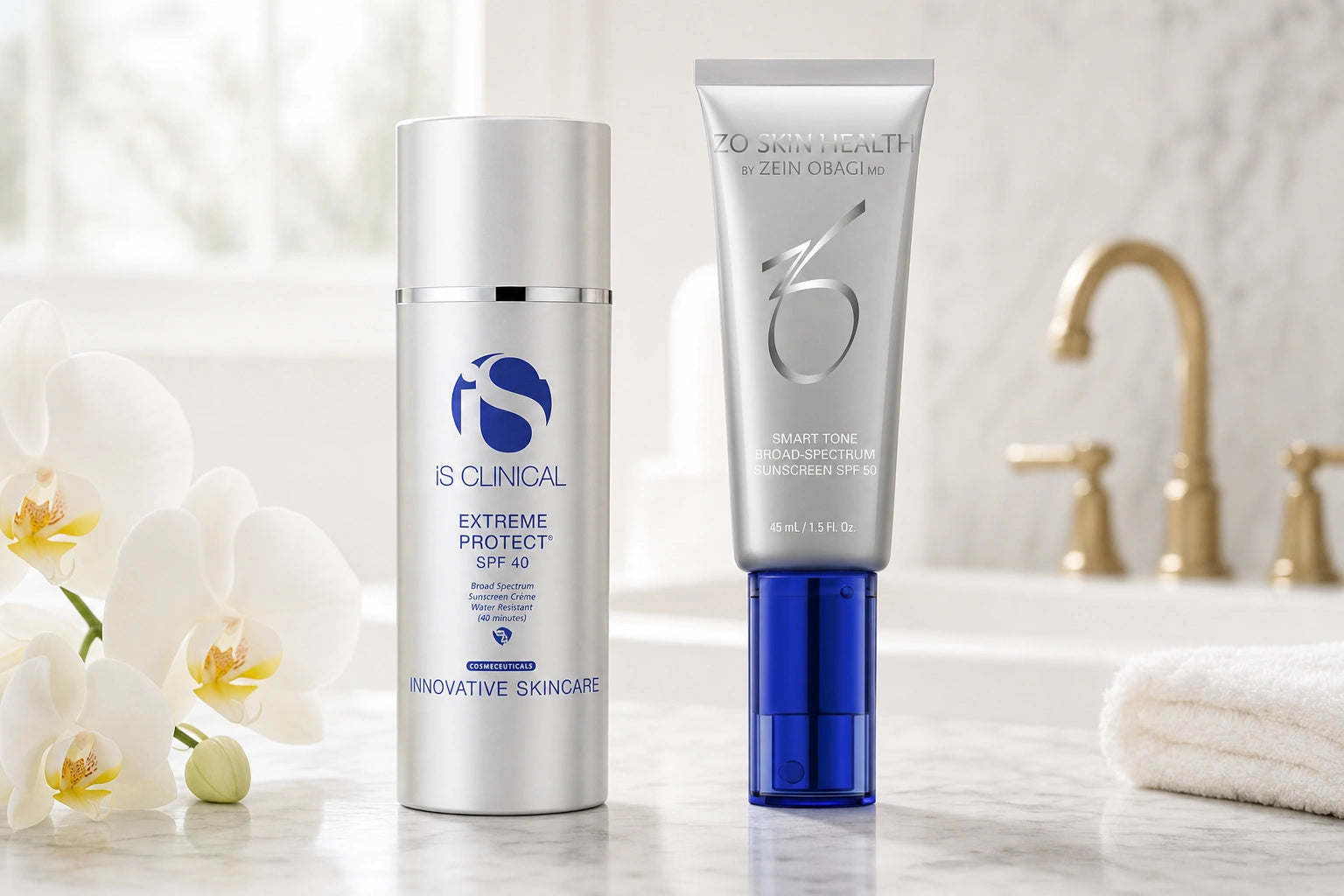
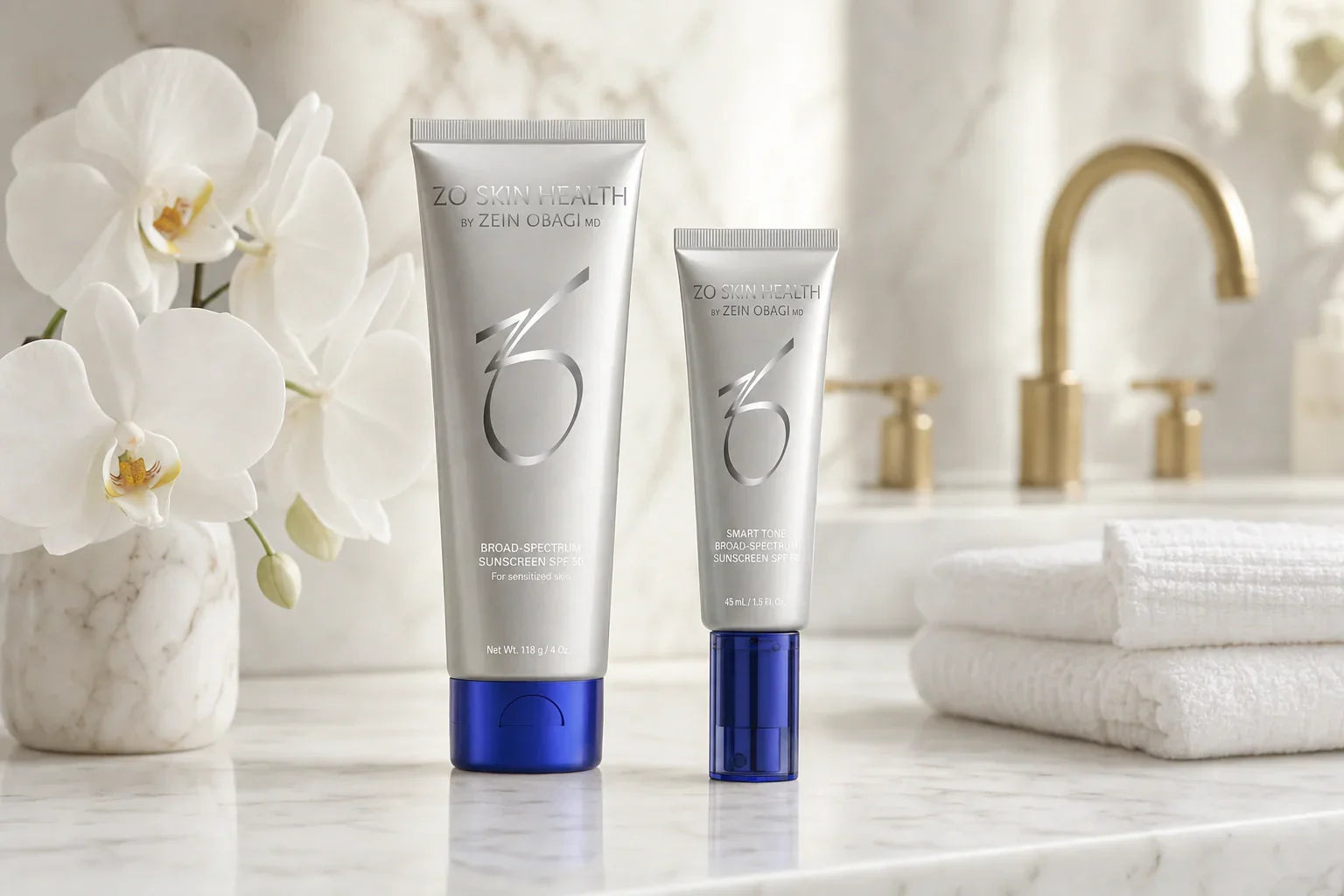
The Smart Tone Broad-Spectrum SPF 50 features a self-adjusting tint that adapts to most skin tones while delivering zinc oxide and titanium dioxide protection. It provides a healthy glow rather than a white mask, though texture remains slightly richer than chemical alternatives.
The trade-off is real: you gain safety and immediate protection, you sacrifice seamless blending. For sensitive or post-procedure skin, that's a worthwhile exchange.
Mineral vs Chemical: What the Research Shows
Consumer Reports' 2024 independent lab testing found mineral sunscreens generally provide lower actual SPF protection than labeled claims, compared to chemical formulas. Only 6 of 28 tested mineral products met their stated SPF in laboratory evaluation.
Chemical filters offer higher real-world SPF and superior cosmetic elegance, but they penetrate the epidermis and occasionally trigger contact sensitivity. Some — oxybenzone, octinoxate — raise environmental and endocrine concerns, though EU Regulation 1223/2009 permits their use within concentration limits.
Hybrid formulas combine zinc oxide with chemical filters like avobenzone or octocrylene to boost UVA protection and improve texture. They're a middle ground — better cosmetic finish than pure mineral, less systemic absorption than pure chemical.
When to choose mineral: sensitivity, pregnancy, immediate post-treatment, or reef-safe preference. When to choose chemical or hybrid: tolerant skin prioritizing high real-world SPF and elegant texture.
For more on year-round SPF use in European climates, the Mediterranean UV intensity — particularly Portugal, Spain, and southern Italy — demands daily protection regardless of season.
How to Apply Mineral Sunscreen Correctly
Mineral formulas require precise application because they work via physical barrier. Gaps = no protection.
Use 2 mg/cm² for the face — roughly 1/4 teaspoon. That's more than most people apply. Mineral sunscreens are opaque enough that you'll see if coverage is uneven; use that visual feedback to spread thoroughly.
Reapply every 2 hours during sun exposure, after swimming, or heavy sweating. Water resistance claims (40 or 80 minutes) indicate how long protection lasts while wet, not total wear time. A "water-resistant 80 minutes" label doesn't mean 80 minutes of total coverage — it means the product maintains its SPF for 80 minutes of continuous water contact.
For reapplication over makeup, powder SPF formulas like ZO's Sunscreen + Powder SPF 30 allow touch-ups without disturbing your base layer.
Mineral Sunscreen in a Professional Routine
Before adding any new active, patch test on the inner forearm for 48 hours.
Morning Routine with Mineral SPF
- Cleanse: Remove overnight oils and prepare skin for active absorption.
- Antioxidant serum (optional): Vitamin C or niacinamide for added environmental defense.
- Mineral SPF: The Broad Spectrum Sunscreen SPF 50 from ZO Skin Health features zinc oxide and titanium dioxide with the ZOX12® antioxidant complex to defend against UVA, UVB, IR-A rays, and HEV light. Lightweight, non-irritating, and formulated specifically for sensitive and post-procedure skin.
Post-Retinol Morning Protocol
If you're using retinol, retinaldehyde, or tretinoin at night, SPF is mandatory the next morning — retinoids increase photosensitivity and cellular turnover leaves fresh cells vulnerable to UV damage.
- Gentle cleanser: Avoid stripping; retinoid-treated skin is already sensitized.
- Hydrating serum or moisturizer: Support barrier function.
- Mineral SPF 50: The same Broad Spectrum Sunscreen SPF 50 — retinoids increase sun sensitivity, so apply SPF every morning without exception.
Mediterranean UV intensity in Portugal, Spain, and southern France is high year-round. If you're using retinoids, AHAs, or BHAs, daily SPF 50 is non-negotiable.
FAQ: Mineral-Based Sunscreen
Which sunscreens are mineral-based?
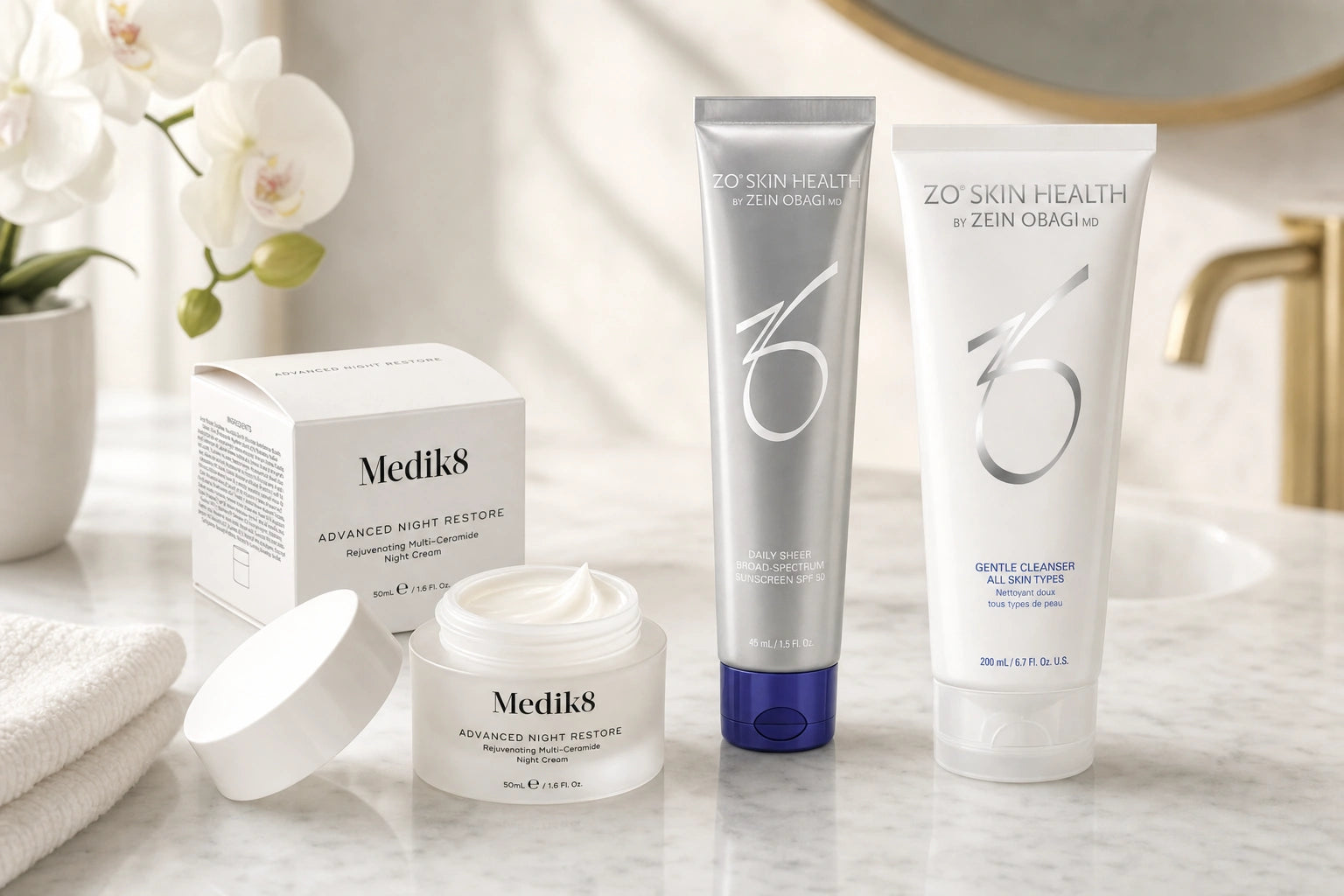
Mineral sunscreens contain zinc oxide, titanium dioxide, or both as active UV filters. Look for these ingredients at the top of the label. Brands like ZO Skin Health, iS Clinical, and Medik8 offer advanced mineral formulas with improved texture and photostability compared to mass-market options.
What sunscreen should I use on Accutane?
Use a broad-spectrum mineral sunscreen with SPF 50 while on isotretinoin (Accutane). Your skin is photosensitive and barrier-compromised. Zinc oxide formulas like ZO's Broad Spectrum SPF 50 won't irritate or penetrate — they sit on the surface and protect immediately.
Is mineral sunscreen actually better?
Mineral isn't universally better — it's better for specific needs. If you have sensitive skin with redness, rosacea, are pregnant, or post-procedure, mineral is the safer choice. For high real-world SPF and cosmetic elegance, chemical or hybrid formulas often perform better. Choose based on skin state.
What sunscreen is best for melasma?
A broad-spectrum mineral SPF 50 with added iron oxides to block visible light — not just UV. Zinc oxide provides stable UVA protection, which is critical for melasma. Tinted formulas like ZO's Smart Tone SPF 50 offer both physical and visible-light defense.
Mineral sunscreen is a category, not a lifestyle. It's the right choice when your skin is reactive, sensitized, or post-treatment — or when pregnancy, breastfeeding, or reef-safe preference makes surface-only protection the priority.
Choose zinc oxide for true broad-spectrum coverage. Accept the white cast or choose a tinted formula. Apply generously, reapply faithfully, and pair with antioxidants for layered defense.
Your skin will thank you — even if your makeup mirror doesn't.