Cart
0
You already know vitamin C is "good for you" — but what does that actually mean when you're standing in the supplement aisle or reading a serum label? Let's cut through the noise. Vitamin C supports three primary functions: collagen synthesis for skin structure and wound repair, immune cell activity during infection, and antioxidant defense against daily cellular damage. The catch? Oral supplementation and topical application deliver entirely different benefits — and you probably need both.
Here's what the research shows, what I see in clinic every week, and how to use vitamin C correctly without wasting money or overpromising results.
The Core Functions: What Vitamin C Actually Does in Your Body
Collagen Synthesis (Skin, Joints, Blood Vessels)
Vitamin C (ascorbic acid) is a cofactor in collagen production — your body can't assemble stable collagen fibers without it. This matters for skin structure, wound closure, and vascular integrity. Unlike fat-soluble vitamins, vitamin C isn't stored in tissues — you need a daily intake to maintain collagen turnover. When levels drop, you'll see slower wound healing and skin laxity before you notice scurvy-level symptoms.
Immune Cell Function and Wound Response
Vitamin C supports neutrophil chemotaxis and lymphocyte proliferation — the immune cells that respond first to infection. Carr & Maggini (2017, Nutrients) demonstrated that adequate vitamin C levels enhance white blood cell migration to infection sites and improve pathogen clearance. It doesn't boost your immune system in the marketing sense — it helps existing immune cells do their jobs efficiently.
Antioxidant Defense Against Free Radicals
As a water-soluble antioxidant, vitamin C neutralizes reactive oxygen species before they damage DNA and cell membranes. It works in cellular fluid while vitamin E handles lipid-rich areas — they're complementary, not interchangeable. This antioxidant capacity is why topical vitamin C is positioned as environmental-stress protection in professional skincare.
Personal observation: clients who supplement 500–1000mg daily during winter report fewer colds and faster post-peel recovery. Anecdotal, but consistent enough that I recommend it during high-stress seasons.
Vitamin C for Skin: Oral vs Topical (And Why You Need Both)
What Oral Vitamin C Does for Skin
Oral vitamin C supports systemic collagen synthesis — your entire body benefits, not just your face. A 1000mg daily dose helps maintain dermal collagen reserves, supports wound healing, and provides baseline antioxidant capacity. But oral supplementation alone won't visibly brighten hyperpigmentation or deliver concentrated UV defense to facial skin.
What Topical Vitamin C Delivers That Oral Can't
Topical vitamin C (L-ascorbic acid) delivers concentrated antioxidant protection directly to the epidermis. Pinnell et al. (2001, Journal of Investigative Dermatology) showed that topical application achieves 20–30× higher skin levels than oral supplementation alone. This matters for melanin synthesis inhibition — Telang (2013, Indian Dermatology Online Journal) confirmed that topical vitamin C reduces melanin formation, which oral supplementation doesn't replicate at visible levels.
Professional-grade formulas (10–20% L-ascorbic acid, pH <3.5) penetrate the stratum corneum and remain stable under proper storage. Mass-market formulas often oxidize in the bottle before you see results.
The Research: Which Works Faster?
Topical vitamin C shows visible brightening in 4–8 weeks. Oral supplementation supports collagen over months. In clinic, I recommend both — 1000mg oral for systemic collagen support and immune function, plus morning topical for UV defense and brightening. They're not redundant.
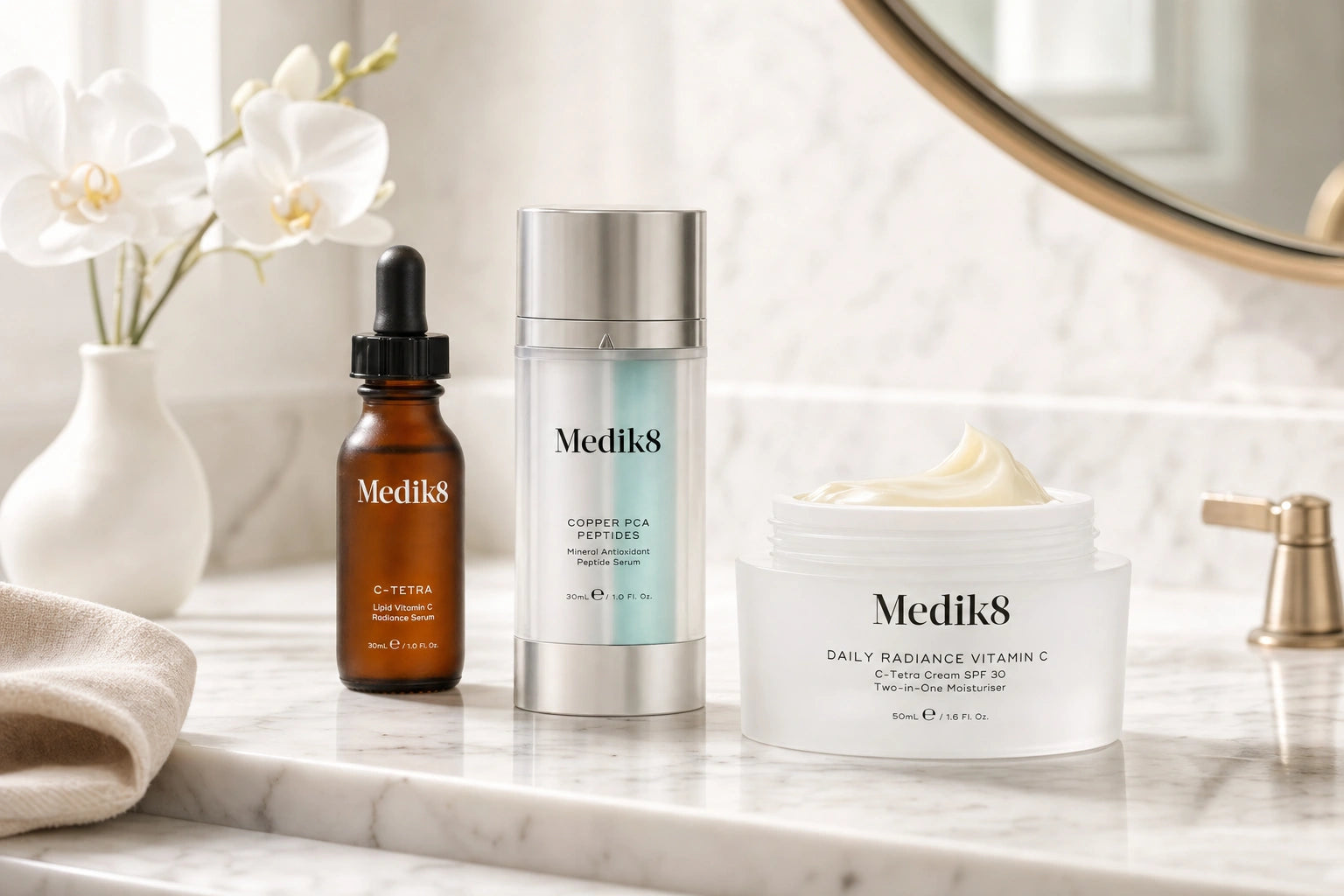
The C-Tetra serum uses tetrahexyldecyl ascorbate, a lipid-soluble vitamin C that's more stable than L-ascorbic acid and suited for beginners or sensitive skin. It delivers antioxidant benefits without the low-pH sting of traditional vitamin C serums.
How Much Vitamin C You Actually Need (And When More Isn't Better)
The EU Recommended Daily Allowance
The EU RDA is 80mg/day for adults (EFSA, 2013) — easily met through diet. One orange provides ~70mg, and 100g of red bell pepper delivers ~130mg. Mediterranean countries (Portugal, Spain, Italy, France) have abundant citrus, tomatoes, and peppers in traditional diets — deficiency is rare unless absorption is impaired.
When Higher Doses Make Sense (And When They Don't)
The upper tolerable limit is 2000mg/day (IOM, 2000). Beyond this, absorption plateaus and gastrointestinal side effects increase — typically loose stools. Smokers, athletes, and post-surgery patients may benefit from 500–1000mg supplementation (Hemilä & Chalker, 2013, Cochrane Database of Systematic Reviews), but most people don't need megadoses.
I don't supplement beyond 500mg unless recovering from illness or post-procedure. More isn't automatically better — absorption efficiency drops as dose increases.
Mediterranean Diet Context: Natural Sources
If you're eating a traditional Mediterranean diet — citrus, leafy greens, peppers, tomatoes — you're likely hitting 150–200mg daily without supplementation. The RDA is a minimum, not an optimum, but you don't need 2000mg to see benefits.
The Immune Question: Does Vitamin C Prevent Colds?
Hemilä & Chalker (2013, Cochrane Database of Systematic Reviews) analyzed 29 trials and found that regular supplementation (≥200mg) does not reduce cold incidence in the general population. The exception: athletes and those under physical stress saw a 50% reduction in cold incidence with regular supplementation.
Once you have a cold, high-dose vitamin C (1000mg+) may shorten duration by ~8% — roughly half a day on average. Realistic expectation: vitamin C supports immune cell function but isn't a preventative for most people.
I take 1000mg at the first sign of symptoms. Placebo or not, I've noticed faster recovery, and the evidence supports modest benefit.
A Morning Routine with Vitamin C (Oral + Topical)
This routine pairs oral supplementation with topical application for comprehensive support. Before adding any new active, patch test on the inner forearm for 48 hours.
- Morning cleanse: Remove overnight oil and prepare skin for serum absorption.
- Vitamin C serum: Apply 2–3 drops of C-Tetra to clean, dry skin. Allow 60 seconds to absorb. This lipid-soluble vitamin C delivers antioxidant protection without the irritation of traditional L-ascorbic acid formulas.
- Moisturizer: Layer a hydrating cream to lock in the serum and support barrier function.
- SPF 30+: Apply Daily Radiance Vitamin C, which combines 7% vitamin C with SPF 30 in one step. Vitamin C itself isn't photosensitizing, but antioxidant degradation from UV makes SPF pairing mandatory. Portuguese, Spanish, Italian, and French UV intensity is high year-round — non-negotiable.
- Oral vitamin C: Take 500–1000mg with breakfast to support collagen synthesis and immune function throughout the day.
This routine delivers both systemic collagen support and targeted topical brightening. You'll see visible radiance improvement in 4–8 weeks.
When to Skip Vitamin C Supplements (And When Topical Is Risky)
High-dose vitamin C (≥1000mg) increases urinary oxalate — a concern for calcium oxalate kidney stone formers. Traxer et al. (2003, Journal of Urology) confirmed the link. Discuss with your GP before supplementing if you have a kidney stone history.
Hemochromatosis: vitamin C enhances iron absorption — contraindicated in iron overload conditions.
Topical vitamin C during active rosacea flare: low-pH formulas may sting on compromised barriers. Switch to Copper PCA Peptides, a pH-neutral antioxidant alternative that delivers free-radical defense without the acid burn.
Post-peel/microneedling: wait 48 hours before resuming vitamin C serum. A compromised barrier plus low pH equals irritation.
Pregnancy/breastfeeding: oral supplementation up to 1000mg is safe (EFSA, 2013), but consult your healthcare provider for personalized guidance.
For more detail on how to choose the right vitamin C serum for your skin type, see our complete formulation guide. To understand Medik8's five vitamin C formulas and which one fits your routine, review the brand overview. And to learn why SPF is mandatory after vitamin C application, read the year-round sun protection breakdown.
Additional authoritative resources: NIH Office of Dietary Supplements vitamin C fact sheet and MedlinePlus vitamin C overview provide comprehensive health-professional guidance on oral supplementation and deficiency risks.
Frequently Asked Questions
What happens when you take vitamin C every day?
Daily vitamin C (80–500mg) supports collagen production, immune cell function, and antioxidant defense. Higher doses (1000mg+) may shorten cold duration but won't prevent colds in most people. Beyond 2000mg/day, absorption plateaus and GI side effects increase.
Does vitamin C boost white blood cells?
Vitamin C supports white blood cell function — enhancing neutrophil chemotaxis and lymphocyte activity (Carr & Maggini, 2017, Nutrients). It doesn't increase white blood cell count itself but optimizes their infection-fighting capacity when levels are adequate.
Does vitamin C help with wound healing?
Yes. Vitamin C is required for collagen synthesis — essential for wound closure and scar formation. Deficiency delays healing, but supplementation beyond adequate levels (80–200mg/day) doesn't accelerate recovery unless you're depleted (Moores, 2013, International Wound Journal).
Is vitamin C safe to take every day?
Yes, up to 2000mg/day (EU upper limit). Most people need only 80–500mg daily. Exceptions: avoid high doses with kidney stones or hemochromatosis. Topical vitamin C is safe daily for most skin types outside active rosacea flares.
Vitamin C isn't a miracle cure — it's a foundational nutrient your body uses constantly for collagen repair, immune defense, and cellular protection. The research supports modest but consistent benefits when you use it correctly: oral supplementation for systemic support, topical application for targeted brightening and UV defense, and realistic expectations about what each delivers.
Start with 500mg oral daily and a stable topical serum in the morning. Track your results over 8 weeks. That's how you'll know if vitamin C works for you — not what a marketing claim promises.