Cart
0
You've probably heard that vitamin C is essential for skin health — but here's what clients often miss: eating an orange and applying L-ascorbic acid to your face deliver entirely different results. Topical vitamin C reaches skin cells at concentrations dietary intake can't match, which is why it's become a cornerstone of professional skincare routines.
This water-soluble antioxidant does more than just brighten. It's a required cofactor in collagen production, a shield against free radicals, and a key player in maintaining barrier function. If you're using retinoids at night or live in a high-UV climate — think Lisbon, Barcelona, or Nice — vitamin C in the morning isn't optional.
Here's how to choose the right form, concentration, and routine placement to get measurable results.
What Vitamin C Is (and Why Topical Application Matters)
Dietary vs. Topical Delivery
Humans can't synthesize vitamin C — we must obtain it through diet or topical application. When you eat vitamin C, digestive enzymes break it down, and only a fraction reaches skin tissue through circulation. Topical L-ascorbic acid bypasses this entirely, delivering higher concentrations directly to cells.
Li and Schellhorn (2007), Journal of Nutrition, detailed vitamin C's enzymatic role in collagen biosynthesis — a process that requires consistent, adequate levels at the cellular level. Topical application achieves this more reliably than oral supplementation alone.
L-Ascorbic Acid: The Gold Standard Form
L-ascorbic acid is the biologically active form of vitamin C. It's what your skin cells recognize and use immediately. Other derivatives — ascorbyl glucoside, magnesium ascorbyl phosphate, tetrahexyldecyl ascorbate — require enzymatic conversion to become active, which can reduce immediate potency but improves shelf stability.
Professional formulations use stabilization technologies to protect L-ascorbic acid from degradation: anhydrous (water-free) bases, encapsulation, or pH buffering below 3.5. Without these, L-ascorbic acid oxidizes rapidly when exposed to light, air, or heat.
How Vitamin C Supports Skin Health
Collagen Cofactor Function
Vitamin C is an essential cofactor in the enzymatic production of collagen, the structural protein that gives skin its firmness. Without adequate vitamin C, collagen synthesis slows — this isn't just about aging, it's basic protein metabolism. Li and Schellhorn (2007), Journal of Nutrition, confirmed its role in collagen biosynthesis pathways, supporting skin structure and wound healing.
Antioxidant Defense Against Free Radicals
Free radicals from UV exposure, pollution, and metabolic processes damage cellular components and accelerate visible aging. Frei et al. (1989), Proceedings of the National Academy of Sciences, identified ascorbic acid as an outstanding antioxidant in human tissue, neutralizing these unstable molecules before they cause harm.
Vitamin C also regenerates other antioxidants, including vitamin E, as demonstrated by Jacob and Sotoudeh (2002), Nutrition in Clinical Care. This synergistic effect amplifies overall antioxidant defense.
Brightening and Tone Evening
Topical vitamin C interferes with melanin production pathways, which may help support a more even-looking complexion. Results vary significantly by formulation stability and concentration — oxidized product delivers zero benefit, which is why storage and packaging matter.
Stability Challenges and Why Formulation Matters
L-Ascorbic Acid Degradation
L-ascorbic acid is notoriously unstable in aqueous solutions. Exposure to light, air, or heat triggers rapid oxidation, turning the product brown or yellow and destroying its antioxidant capacity. I see this on consult almost daily — clients don't realize that discolored serum is ineffective.
Professional Stabilization Technologies
Professional formulations address instability through anhydrous bases, encapsulation, or pH buffering below 3.5. These technologies keep L-ascorbic acid active during storage and after application. Derivatives like ascorbyl glucoside or tetrahexyldecyl ascorbate offer improved stability but require enzymatic conversion in skin to become active L-ascorbic acid, which may reduce immediate potency.
Recognizing Oxidation
Discard any vitamin C product that turns brown, yellow, or develops an off odor. These are oxidation indicators — the product has degraded and won't deliver antioxidant protection. Store in opaque, airtight packaging away from light and heat, and check expiration dates.
Choosing the Right Concentration and pH
Research suggests concentrations between 10–20% show measurable benefit for skin. Higher percentages don't necessarily improve results and may increase irritation risk, particularly if you're new to vitamin C.
L-ascorbic acid requires a pH between 2.5–3.5 for optimal skin penetration. This acidic environment can cause temporary tingling, especially in sensitive skin types. Start with a lower concentration — 10% is ideal for beginners — and build tolerance gradually.
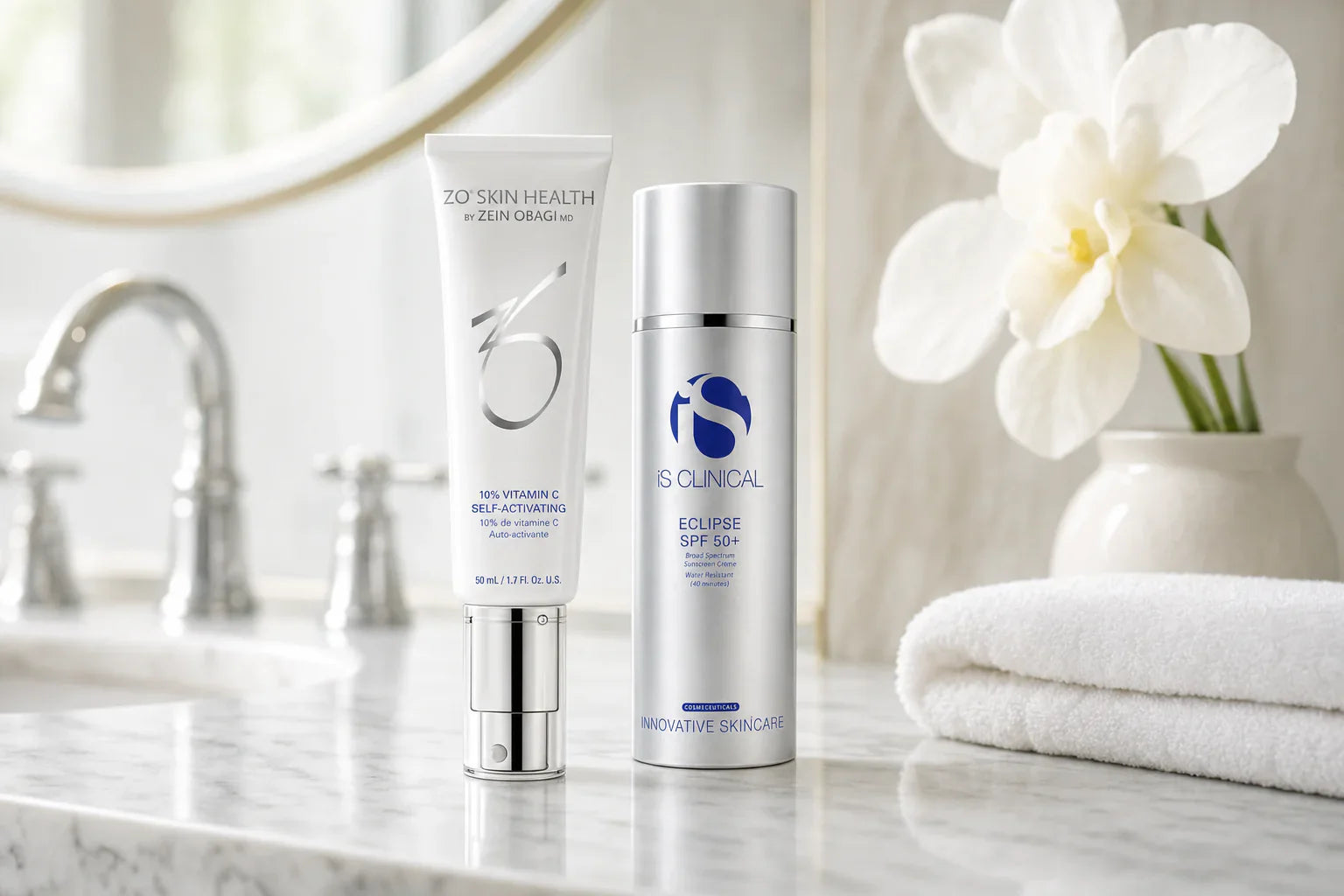
The 10% Vitamin C Self-Activating serum from ZO Skin Health is pH-optimized and stabilized for daily use, promoting a more even skin tone while minimizing the appearance of fine lines.
Before adding any new active, patch test on the inner forearm for 48 hours.
How to Use Vitamin C in Your Morning Routine
Apply vitamin C to cleansed skin before moisturizer and SPF. Morning application maximizes antioxidant defense during daytime environmental exposure — when UV radiation and pollution are actively generating free radicals.
Because the body doesn't store vitamin C, consistent daily application is important for sustained benefit. Layer under moisturizer and sunscreen for maximum protection.
Here's a simple morning routine:
- Cleanser — remove overnight oils and prep skin
- 10% Vitamin C Self-Activating — apply to dry skin, allow to absorb
- Moisturizer — seal in hydration and actives
- Eclipse SPF 50+ — broad-spectrum protection with zinc oxide and titanium dioxide
Vitamin C enhances photoprotection but doesn't replace it. If you're using retinoid routine at night, pairing with broad-spectrum sunscreen in the morning is non-negotiable.
In Mediterranean climates — Portugal, Spain, southern France, Italy — UV index regularly exceeds 8 from May through September. Daily SPF isn't optional; it's essential barrier defense.
Who Benefits Most from Topical Vitamin C
Nearly everyone benefits from topical vitamin C, but certain skin types and concerns see more dramatic results:
- Anyone concerned with photoaging, uneven tone, or daily environmental exposure
- Essential pairing if you're using retinoids — vitamin C in the morning, retinoid at night
- Urban environments with high pollution benefit from enhanced antioxidant protection
- Clients in their 30s and beyond seeking preventive care
- Those with visible sun damage or pigmentation concerns
- Sensitive skin types should start with lower concentrations and build tolerance gradually
When choosing the right vitamin C product, consider concentration, pH, packaging, and stabilization technology. Professional formulations deliver measurable results because they're engineered to keep L-ascorbic acid stable and bioavailable.
Frequently Asked Questions
For what is vitamin C good for?
Topical vitamin C is a cofactor in collagen production and a potent antioxidant. It helps support skin firmness, neutralizes free radicals from UV and pollution, and may improve the appearance of uneven tone. Unlike dietary intake, topical application delivers higher concentrations directly to skin cells.
What's the difference between dietary and topical vitamin C for skin?
Dietary vitamin C supports overall health but reaches skin indirectly through circulation. Topical L-ascorbic acid delivers higher concentrations directly to skin cells, bypassing digestive degradation. Research shows topical application achieves measurably higher skin-tissue levels than oral supplementation alone.
How do I know if my vitamin C serum has oxidized?
Oxidized vitamin C turns brown, yellow, or develops an off odor. L-ascorbic acid degrades when exposed to light, air, or heat. Once oxidized, it loses antioxidant efficacy. Store in opaque, airtight packaging, check expiration dates, and discard if color or smell changes.
Can I use vitamin C with retinol?
Yes — this is one of the most effective pairings in professional skincare. Use vitamin C in the morning for antioxidant defense and retinol at night for renewal support. The two actives work on different pathways and complement each other without interference when applied at separate times.