Cart
0
What is Vitamin C and Why is it Essential for Skin?
Vitamin C, scientifically known as L-ascorbic acid, is a water-soluble nutrient that the human body cannot produce on its own. In skincare, it functions as a powerful antioxidant that protects against environmental damage while offering multiple benefits for skin health and appearance. This essential nutrient plays a crucial role in maintaining skin's youthful resilience and radiance.
The Science Behind Vitamin C
At its core, vitamin C works as a defensive shield against free radical damage. Free radicals are unstable molecules produced by UV exposure, pollution, and normal metabolic processes that can damage skin cells. According to research from the Linus Pauling Institute, vitamin C neutralizes these harmful molecules before they can cause oxidative stress.
Beyond protection, vitamin C is essential for collagen synthesis. Collagen is the structural protein that maintains skin's firmness and elasticity. As we age, collagen production naturally declines, leading to fine lines and sagging. Vitamin C stimulates fibroblasts (the cells that produce collagen) to work more efficiently, helping to maintain skin's supportive structure.
Forms of Vitamin C in Skincare
Not all vitamin C forms are created equal in skincare. The most researched and potent form is L-ascorbic acid, which delivers the most direct benefits but is also the least stable. Professional formulations solve this challenge through advanced stabilization methods.
Other derivatives include sodium ascorbyl phosphate (water-soluble and stable), ascorbyl palmitate (fat-soluble), magnesium ascorbyl phosphate (gentle and water-soluble), and tetrahexyldecyl ascorbate (oil-soluble with enhanced penetration). These derivatives convert to L-ascorbic acid once absorbed by the skin, though typically with less potency than direct L-ascorbic acid.
Professional-grade formulations typically contain vitamin C concentrations between 10-20%, with an acidic pH below 3.5 for optimal absorption. This precise formulation science is why products like ZO Skin Health 10% Vitamin C Self-Activating deliver superior results compared to mass-market alternatives.
Key Skin Concerns Addressed by Vitamin C
Uneven Skin Tone & Hyperpigmentation
One of vitamin C's most celebrated benefits is its ability to brighten skin and fade discoloration. It works by inhibiting tyrosinase, an enzyme essential for melanin production. By reducing melanin formation, vitamin C helps prevent and fade dark spots, sunspots, and post-inflammatory hyperpigmentation.
Research published in the Journal of Clinical and Aesthetic Dermatology confirms that topical vitamin C effectively reduces pigmentation when used consistently. Products like Medik8 Super C Ferulic leverage this property with a potent formula specifically designed to target photoaging and uneven tone.
Fine Lines & Loss of Firmness
As we age, our skin's natural vitamin C content decreases, particularly in sun-exposed areas. This decline contributes to accelerated aging signs. Topical vitamin C helps compensate for this loss by boosting collagen synthesis and protecting existing collagen from degradation.
The result is improved skin elasticity, diminished fine lines, and a firmer complexion. For those focusing on anti-aging benefits, iS Clinical Super Serum Advance+ combines 15% L-ascorbic acid with copper tripeptide growth factors to deliver comprehensive rejuvenation.
Environmental Damage
Vitamin C's antioxidant properties make it exceptional for protecting against environmental aggressors. This protection is particularly crucial in Mediterranean regions like Portugal, Spain, Italy, and France, where high UV intensity accelerates photoaging.
When applied in the morning, vitamin C creates a defensive barrier against UV radiation, pollution, and other environmental stressors throughout the day. It doesn't replace sunscreen but enhances its protective capabilities when used together. This synergistic effect is why products like Medik8 Daily Radiance Vitamin C combine vitamin C with SPF 30 for comprehensive protection.
How to Incorporate Vitamin C into Your Skincare Routine
Morning vs. Evening Application
While vitamin C can be applied both morning and night, dermatologists typically recommend morning application. This timing maximizes its photoprotective benefits throughout the day when your skin faces the most environmental challenges. The antioxidant shield it creates works in real-time to neutralize free radicals as they form.
Evening application is still beneficial, focusing on repair rather than protection. However, if you're using only one vitamin C product daily, the morning delivers optimal benefits, especially in high-UV Mediterranean countries like Spain and Italy.
Combining with Other Actives
Vitamin C works harmoniously with certain ingredients while potentially conflicting with others. It pairs exceptionally well with vitamin E and ferulic acid, which enhance its stability and effectiveness. This synergistic combination is found in premium products like Medik8 Super C Ferulic.
Hyaluronic acid and peptides also complement vitamin C by providing hydration and additional anti-aging benefits. However, avoid directly mixing vitamin C with benzoyl peroxide, which can oxidize vitamin C and reduce its efficacy.
For retinol users, the traditional advice was to separate these ingredients into different routines (vitamin C in morning, retinol at night) due to potential pH conflicts. However, newer stabilized formulations like Medik8 C-Tetra can work alongside retinol with less concern for interaction.
Complete Vitamin C Skincare Routine
Morning Routine
Step 1: Cleanse - Start with a gentle cleanser to remove overnight impurities without stripping the skin. The C-ESTA® Cleansing Gel from Jan Marini provides initial vitamin C benefits during this first step.
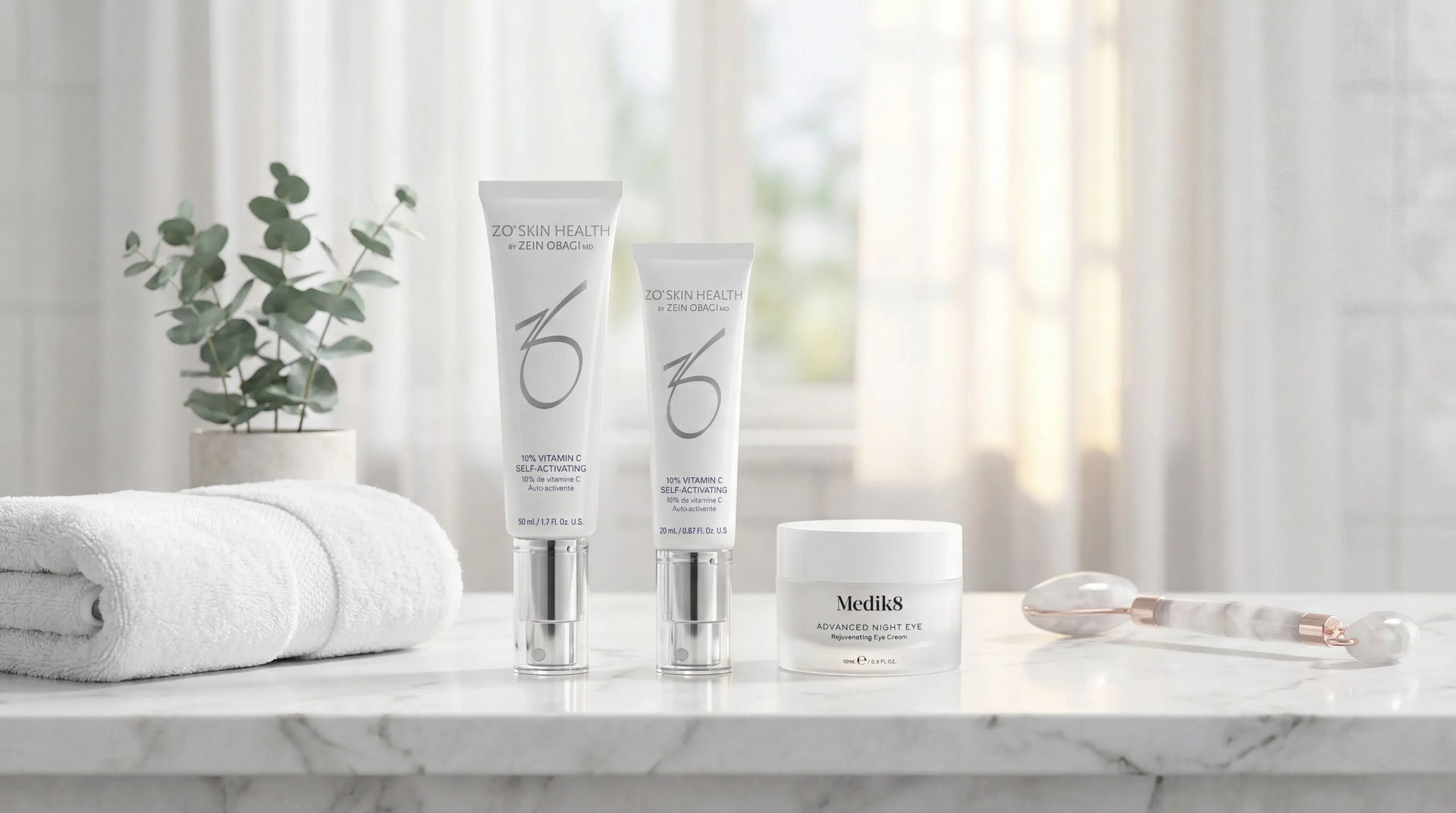
Step 2: Vitamin C Serum - Apply 3-5 drops of your chosen vitamin C serum to slightly damp skin. The ZO Skin Health 10% Vitamin C Self-Activating offers an ideal concentration for daily use, activating only upon application to maintain maximum potency.
Step 3: Moisturize - Follow with a hydrating moisturizer to seal in the vitamin C and provide additional nourishment. Products containing hyaluronic acid complement vitamin C's benefits by plumping the skin.
Step 4: SPF - Always finish with a broad-spectrum SPF 30 or higher, especially in Mediterranean regions with high UV exposure. The Medik8 Daily Radiance Vitamin C combines steps 2-4 with its vitamin C + SPF 30 formula for a streamlined routine.
Evening Routine
Step 1: Double Cleanse - Remove makeup and sunscreen with an oil-based cleanser, followed by a water-based cleanser to purify the skin.
Step 2: Treatment - Evening is ideal for retinol, peptides, or other active treatments. Products like the anti-wrinkle serum can complement your morning vitamin C application.
Step 3: Moisturize - Apply a nourishing night cream to support skin regeneration. For those seeking additional vitamin C benefits, C-ESTA® Face Cream provides a lipid-soluble form of vitamin C that works overnight.
This routine creates a comprehensive approach where vitamin C protects during the day, while complementary ingredients repair and regenerate at night. Consistent application is key—results typically become visible after 4-12 weeks of regular use, depending on formulation strength.
Professional vs. Mass-Market Vitamin C Products
Formulation Differences
The gap between professional-grade vitamin C products and mass-market alternatives extends far beyond price point. Professional brands like ZO Skin Health, iS Clinical, and Medik8 invest extensively in formulation science, resulting in several critical advantages.
First is ingredient quality. Professional products typically use pharmaceutical-grade vitamin C with higher purity levels. They also maintain precise concentration levels—typically between 10-20%—that research has shown to be most effective without causing irritation.
Second is the supporting cast of ingredients. Professional formulas often include complementary antioxidants like vitamin E and ferulic acid that enhance stability and efficacy. For example, Medik8 Super C Ferulic combines these elements in precise ratios backed by clinical research.
Stability and Efficacy
Vitamin C's greatest challenge is stability—it oxidizes rapidly when exposed to air, light, and heat, turning from clear/white to yellow or brown and losing efficacy. Professional brands address this through advanced stabilization technologies.
These include anhydrous formulations (water-free), encapsulation technologies, and airless pump packaging. The ZO Skin Health 10% Vitamin C Self-Activating exemplifies this innovation with its self-activating system that keeps vitamin C stable until the moment of application.
Delivery systems also differ significantly. Professional formulations utilize advanced technologies that enhance penetration through the skin barrier, allowing the active ingredients to reach deeper layers where they can stimulate collagen production and provide antioxidant protection.
These formulation advantages translate to more predictable, consistent results—the reason why dermatology clinics across Europe, from Lisbon to Barcelona to Milan, overwhelmingly choose professional-grade vitamin C products for their patients.
Best Professional Vitamin C Products for Your Skin Type
For Sensitive Skin
Sensitive skin requires vitamin C formulations that deliver benefits without irritation. The most gentle forms include sodium ascorbyl phosphate and magnesium ascorbyl phosphate, which have neutral pH levels.
The Medik8 C-Tetra is ideal for sensitive skin types, using stable tetrahexyldecyl ascorbate that provides vitamin C benefits without the potential irritation of L-ascorbic acid. Its oil-soluble nature also enhances penetration without disrupting the skin barrier.
For those extremely sensitive to vitamin C, Medik8 Copper PCA Peptides offers an alternative antioxidant approach that provides similar protective benefits without vitamin C.
For Aging Skin
Mature skin benefits from higher concentrations of vitamin C combined with complementary anti-aging ingredients. The focus should be on formulations that boost collagen production while addressing multiple signs of aging.
The iS Clinical Super Serum Advance+ delivers comprehensive age-defying benefits with its 15% L-ascorbic acid combined with copper tripeptide growth factors. This potent formulation targets fine lines, wrinkles, hyperpigmentation, and loss of firmness simultaneously.
For those seeking advanced anti-aging results, Medik8 Super C Ferulic contains an impressive 30% ethylated L-ascorbic acid along with ferulic acid and vitamin E to target deep wrinkles and significant photoaging.
For Oily/Combination Skin
Oily and combination skin types benefit from lightweight, non-comedogenic vitamin C formulations that won't exacerbate sebum production or clog pores. Water-based serums are generally preferable to oil-based formulations.
ZO Skin Health 10% Vitamin C Self-Activating provides a lightweight texture that absorbs quickly without adding shine or heaviness. Its oil-control properties make it particularly suited for those with oilier complexions.
Regardless of skin type, professional vitamin C products outperform mass-market alternatives due to their advanced formulation science, higher-quality raw materials, and enhanced delivery systems. This is why leading dermatologists and skincare clinics throughout the Mediterranean region rely on these professional-grade options for their patients.
Frequently Asked Questions About Vitamin C
What does vitamin C do for your skin?
Vitamin C is a powerful antioxidant that protects skin from environmental damage, stimulates collagen production for improved firmness, reduces hyperpigmentation by inhibiting melanin formation, and enhances skin's radiance. In professional formulations, it provides visible improvement in skin tone, texture, and signs of aging with consistent use.
How often should you use vitamin C on your face?
For optimal results, apply vitamin C products once daily, preferably in the morning to maximize its photoprotective benefits when paired with SPF. Professional-grade formulas (10-20% concentration) deliver significant benefits with daily application. Those with sensitive skin may start with every other day, gradually increasing frequency as tolerance builds.
Can vitamin C be used with other active ingredients?
Vitamin C pairs excellently with hyaluronic acid, peptides, and SPF. It also works synergistically with vitamin E and ferulic acid for enhanced stability and efficacy. However, avoid direct mixing with benzoyl peroxide and retinol in the same application (separate AM/PM usage is ideal) to maintain potency and prevent potential irritation.
How do you know if vitamin C is working on your skin?
Visible signs that vitamin C is working include increased radiance and brightness within 2-3 weeks, more even skin tone after 4-6 weeks, and improved firmness and reduced fine lines after 8-12 weeks of consistent use. Professional formulations typically deliver faster, more noticeable results due to higher concentrations and enhanced delivery systems.