Cart
0
You've seen citrus extracts on ingredient lists and wondered if that leftover orange peel from breakfast could do the same thing. It can't — and here's why understanding the difference between culinary scraps and cosmetic-grade extracts matters for your skin.
Orange peel (Citrus sinensis) appears in professional skincare for its fragrance, antioxidant compounds, and skin-conditioning properties. But under EU Regulation 1223/2009, it's classified as a cosmetic ingredient — not a therapeutic active. That means it cannot legally treat or cure skin conditions, no matter how compelling the marketing.
In clinic, clients often ask if the orange extract in their serum is "doing the same thing as vitamin C." The short answer: no. The longer answer involves extraction methods, stability, and what actually reaches your skin. Let's break it down.
What Orange Peel Is (And Isn't) in Cosmetics
The botanical breakdown
Dried sweet orange peel contains vitamin C, flavonoids like hesperidin and naringin, and limonene. Ghasemi et al. (2009), Food Chemistry, identified hesperidin and naringin as the dominant flavonoids in sweet orange peel, with measurable antioxidant capacity in DPPH assays — lab tests showing free-radical scavenging, not skin penetration.
When you see orange peel for skin on a product label, you're looking at one of three forms: aqueous extract (water-based, gentle), essential oil (cold-pressed from rind, fragrant but photosensitizing), or finely milled powder (physical exfoliant). The form determines everything — from safety to function.
Extract versus essential oil versus powder
Aqueous extracts are the gentlest. They carry water-soluble antioxidants and lower photosensitivity risk. Essential oil, by contrast, is 90–95% limonene, according to Moufida & Marzouk (2003), Journal of Essential Oil Research. That high limonene content makes it fragrant — and photosensitizing. Powder is milled peel used for physical exfoliation; particle size matters here. Coarse powder risks micro-tears; finely milled feels smooth.
I've seen clients patch-test a serum with orange oil mid-list and break out in redness after UV exposure the next day. The oil wasn't the problem — the sun was. Limonene oxidizes on air exposure, forming allergenic degradation products, and it increases UV sensitivity. If you see citrus oil in the top half of an INCI list, pair with SPF or save it for evening.
What Orange Peel Does in Professional Formulations
Antioxidant support
Flavonoids like hesperidin and naringin do show antioxidant activity in vitro. That means they neutralize free radicals in a petri dish. Whether they penetrate human skin at cosmetic concentrations is a different question — one with less evidence. In finished products, citrus peel extract benefits formulation stability more than it delivers targeted antioxidant results at the cellular level.
Vitamin C content (and its limitations)
Dried orange peel contains vitamin C, but the amount degrades over time. Anwar et al. (2008), Journal of Science of Food and Agriculture, documented that fresh peel has significantly higher ascorbic acid content than aged material. By the time peel is dried, extracted, and formulated into a serum, the vitamin C concentration is uncontrolled and unstable.
Compare that to L-ascorbic acid serums, which deliver 10–20% standardized concentrations at pH 2.5–3.5 for optimal penetration. Li and Schellhorn (2007), Journal of Nutrition, confirmed vitamin C's role as a cofactor in collagen biosynthesis — a function that requires stable, adequate concentrations. Orange peel extract doesn't meet that threshold.
Fragrance and sensory appeal
This is where citrus extracts shine. They smell clean, fresh, and citrus-bright. For many formulations, that's the point. Professional-grade extracts undergo standardized extraction, microbial testing, and stability assays — a different quality tier than home-dried peel. You're paying for consistent fragrance and antioxidant support, not therapeutic vitamin C delivery.
The Photosensitivity Question: When Orange Peel Needs Caution
Essential oil increases UV sensitivity. Aqueous extract doesn't — at least not to the same degree. If you see Citrus sinensis peel oil or Citrus aurantium dulcis peel oil in the top five ingredients, use the product in the evening or pair it with broad-spectrum SPF daily.
Limonene oxidizes when exposed to air, forming compounds that can trigger allergic contact dermatitis. Moufida & Marzouk (2003), Journal of Essential Oil Research, noted that limonene comprises 90–95% of cold-pressed orange oil and has documented photosensitivity potential. I always ask clients to patch-test products with high citrus oil content on the inner forearm for 48 hours before full-face application.
Aqueous extracts — the kind you'll see mid-list in most serums — carry a lower risk. They're gentler, less fragrant, and don't concentrate limonene the way cold-pressed oil does.
Orange Peel Versus Vitamin C Serums: A Realistic Comparison
Clients in their 30s and 40s often ask if the citrus extract in a multi-ingredient serum can replace a dedicated vitamin C product. No.
Orange peel extract contains vitamin C in uncontrolled, unstable amounts. L-ascorbic acid serums deliver 10–20% standardized concentrations at a pH low enough for penetration. That matters because vitamin C's role in collagen synthesis — confirmed by Li and Schellhorn (2007), Journal of Nutrition — requires consistent bioavailability. Home-dried peel won't deliver that. Neither will most citrus extracts in commercial formulas.
Think of orange peel as a nice-to-have fragrant antioxidant. It's not a replacement for professional-grade vitamin C serums with pH-buffered L-ascorbic acid. If you want targeted brightening, collagen support, and free-radical defense, you need a serum built around stabilized vitamin C — not one where citrus extract appears at position 12 on the INCI list.
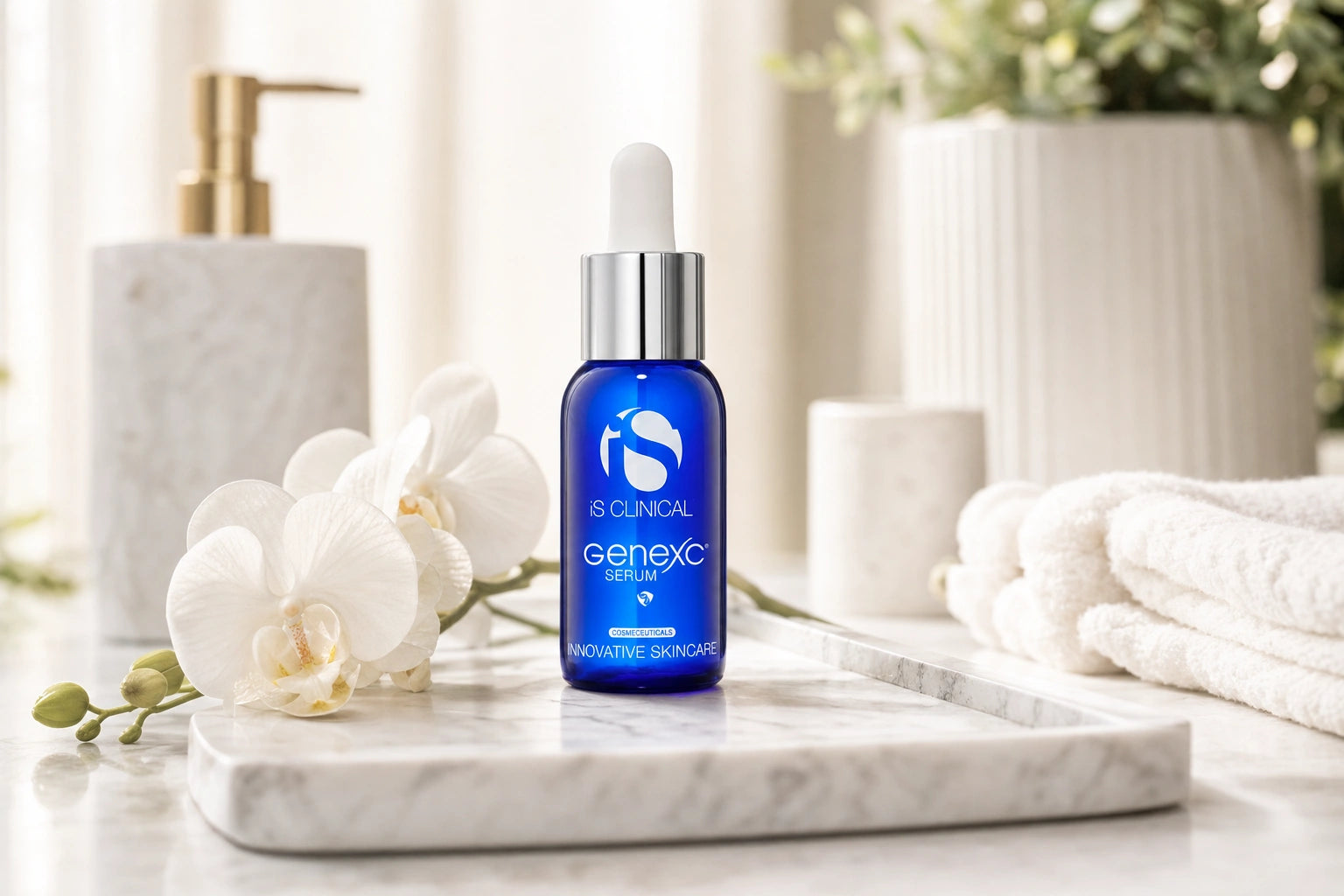
For reliable vitamin C delivery, GeneXC Serum combines 20% L-ascorbic acid with Extremozymes and botanically sourced fruit acids. It's formulated for stability, penetration, and long-term visible improvements — the kind of targeted approach that home-dried peel or mid-list extracts can't replicate. You're getting antioxidant protection, support for skin tone and texture, and a formula that addresses how vitamin C supports collagen synthesis at concentrations that matter.
Where You'll Actually See Orange Peel in Your Routine
Morning: antioxidant support with SPF pairing
Most professional formulas list orange peel mid-INCI — it's a supporting player, not the star. If the product contains essential oil, use it with SPF. If it's an aqueous extract, you're safe for daytime without additional caution.
No Baza products currently feature citrus peel extract as a primary ingredient, but you'll find it mid-list in some multi-ingredient serums. Check INCI lists when shopping — if you see peel oil in the top five, plan for evening use or pair with sunscreen.
Evening: multi-ingredient serums (mid-list)
Evening is ideal for products with higher citrus oil content. You avoid photosensitivity risk, and the fragrance feels fresh before bed. But again — you're not using the product for the orange peel. You're using it for the primary actives (retinol, niacinamide, peptides), and the citrus extract is along for the sensory ride.
Example morning routine with vitamin C as the primary antioxidant: gentle cleanser → GeneXC Serum → moisturizer → SPF. If your serum happens to contain orange peel extract mid-list, that's fine. It's not why you bought it.
DIY Orange Peel Versus Clinical-Grade Extracts
Home-dried orange peel — the kind you air-dry from breakfast leftovers — works for culinary use or gentle face masks. It has no microbial control, no standardized potency, and no stability testing. If you want to mash it with yogurt for a 10-minute mask, you won't harm yourself. You also won't get results comparable to a professional serum.
Organic versus conventional matters here. Conventional oranges often carry wax coatings and pesticide residue on the rind. For topical use, that's significant. Organic or thoroughly washed peel is preferable if you're going the DIY route — but even then, you're operating without quality control.
Clinical extracts undergo standardized extraction (usually water or glycerin-based), microbial testing, and stability assays. They're formulated to consistent potency and stored under controlled conditions. Peak season for fresh orange peel is December through March in the Northern Hemisphere; Valencia peel tends to be cleaner and sweeter, while Navel can taste slightly bitter. But by the time citrus reaches a cosmetic lab, seasonality matters less than extraction protocol.
The quality gap between home-dried peel and a lab-extracted ingredient is the same gap between squeezing a lemon on your face and using a pH-buffered L-ascorbic acid serum. One is a pantry experiment. The other is formulated to deliver.
Frequently Asked Questions
Is orange peel good for your skin?
Orange peel extract supports formulation stability and provides antioxidant compounds like hesperidin, but it's a cosmetic ingredient — not a therapeutic one. In finished products, it works as a fragrant, gentle antioxidant, not a primary active. Pair with SPF if essential oil is present, and don't expect it to replace stabilized vitamin C serums for targeted brightening.
Can orange peel lighten skin tone?
The extract contains vitamin C, which may support a more even-looking complexion, but amounts in cosmetic formulations are uncontrolled and unstable. For targeted brightening, L-ascorbic acid serums at 10–20% deliver more reliable, pH-buffered results than citrus extracts alone. Think of it as a background antioxidant, not a depigmenting agent.
What's the difference between orange peel extract and orange essential oil?
Aqueous extract is water-based, gentle, and lower photosensitivity risk. Essential oil (cold-pressed from rind) is fragrant but photosensitizing — it's 90–95% limonene, which increases UV sensitivity and can oxidize into allergenic compounds. Check product INCI lists and use oil-heavy formulas with SPF or in the evening.
Does orange peel work for acne?
Orange peel is formulated for fragrance and antioxidant support, not acne management. EU Regulation 1223/2009 prohibits cosmetic ingredients from making therapeutic claims like treating conditions. For clearer-looking skin, salicylic acid, niacinamide, or retinoids in professional formulations offer more targeted options with better-documented mechanisms.
Orange peel extract isn't a hero ingredient — it's a pleasant background note in well-formulated serums. If you want citrus antioxidants, you'll get them. If you want vitamin C that actually works, reach for a stabilized L-ascorbic acid product and save the breakfast scraps for compost.